The Saqqara Digging Diaries 2025 - Second Week
Saqqara in Fragments: The Story Told by Pottery
We’re already into the second week of the mission, and the rhythm of excavation has become part of our daily life.
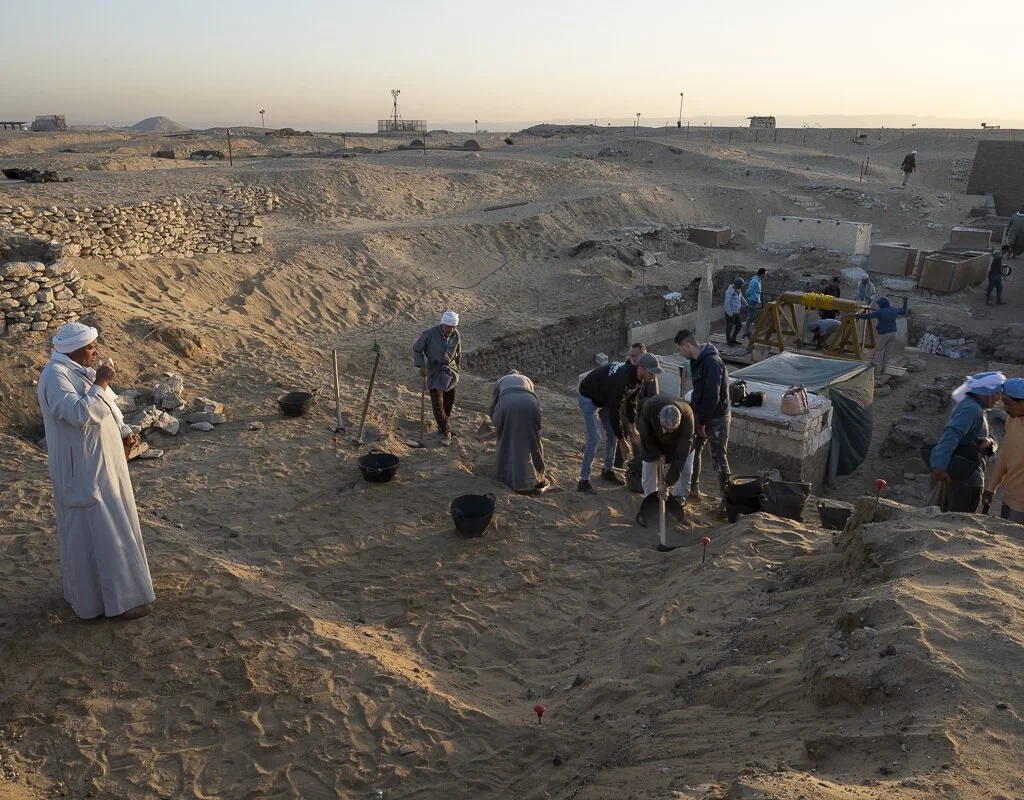
The minibus drives off quickly, raising a cloud of dust and sand, while we remain south of Djoser’s pyramid, just a few steps away from the area we’re exploring. The morning air is still cool: bundled up in windbreakers and scarves, we shoulder our backpacks and head toward the site. It’s exactly 7:00 a.m.
Our Egyptian colleagues are already there; the rais Mohammed spots us and greets us with a smile. Between handshakes, we exchange good wishes for the day: sabāh el-kheir, answered by the melodic and poetic sabāh el-nur — “a morning of light.” And indeed, the light is coming. Around us, the sun begins to rise above the horizon, slowly warming the sand; the air fills with a subtle vibration — that of a place which, day after day, continues to tell its story.
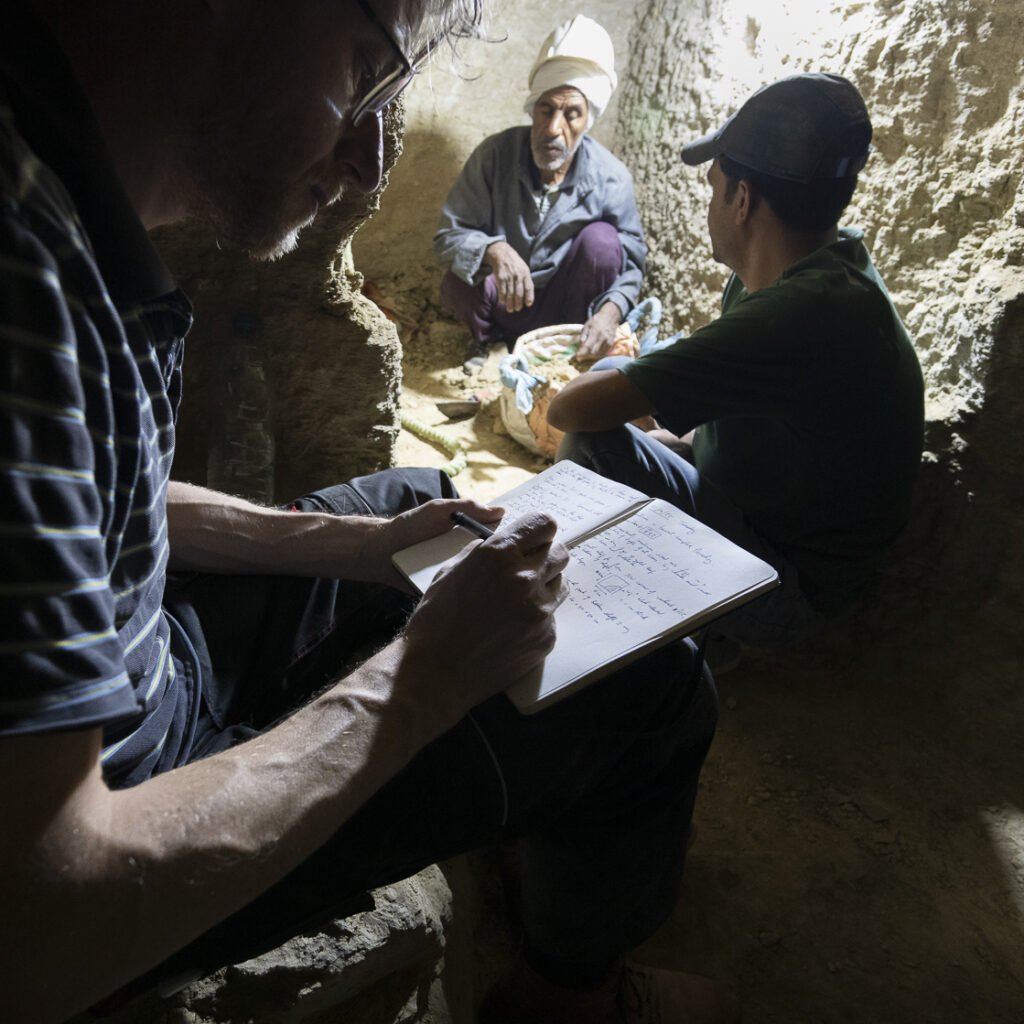
Over the past week, we’ve continued working in the area of Panehsy’s tomb, focusing particularly on the western side to better understand its outer perimeter. At the same time, activities continue in the tomb shaft, which had already been partially excavated during the previous mission. We are now in the deepest section, which we’re carefully clearing so that it can later be documented through 3D modeling.
The excavation proceeds stratigraphically: in the upper layers we find traces of our own era or just slightly earlier ones. Believe it or not, we even uncovered old newspaper pages with the date still visible! Only by digging will we reach the historical period to which Panehsy’s tomb belongs (1539–1077 BCE). It’s a long and meticulous process: every piece of information must be recorded. Layer by layer, small pottery fragments begin to emerge from the sand — rims, handles, bases, walls. They are the first signs that the site is ready to reveal its stories.
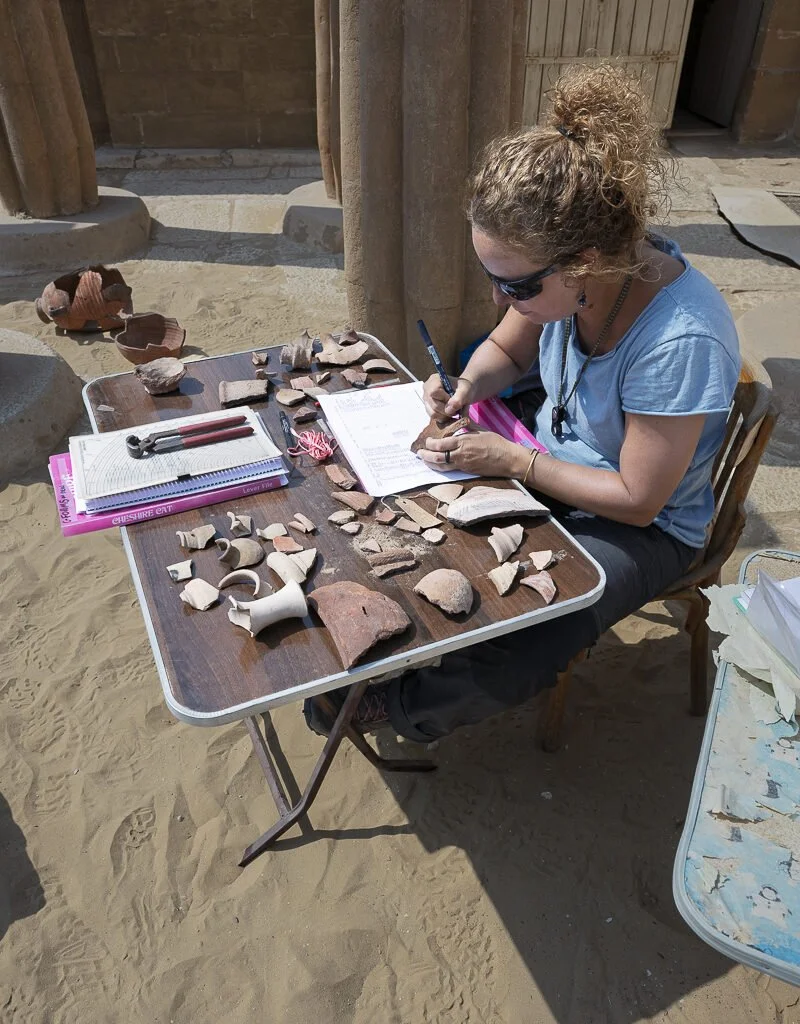
When a fragment is collected, its journey is far from over — in fact, that’s when it truly begins. Each zambil — baskets made from old tires — leaving the excavation area, filled with pottery, carries the number of the stratigraphic unit where the fragments were found, the excavation year, coordinates, and a few notes from the field book. The baskets are transported to the courtyard of Horemheb’s tomb, where the washing of the fragments begins. Water removes the sand and reveals the surfaces, the marks left by the potter’s wheel or by the craftsman’s fingers. Drying takes place in the sun. Little by little, the mats fill up with clean sherds — it’s time for sorting: selection, division, observation.
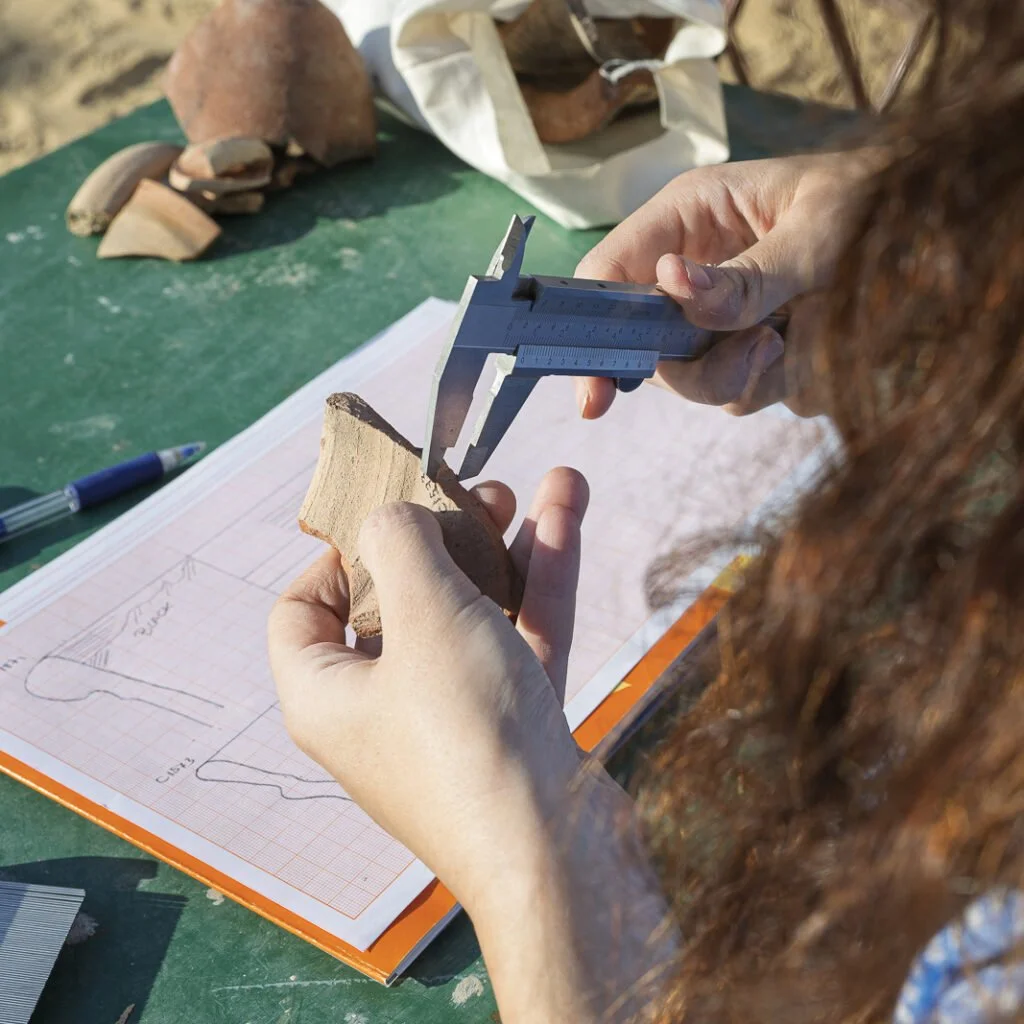
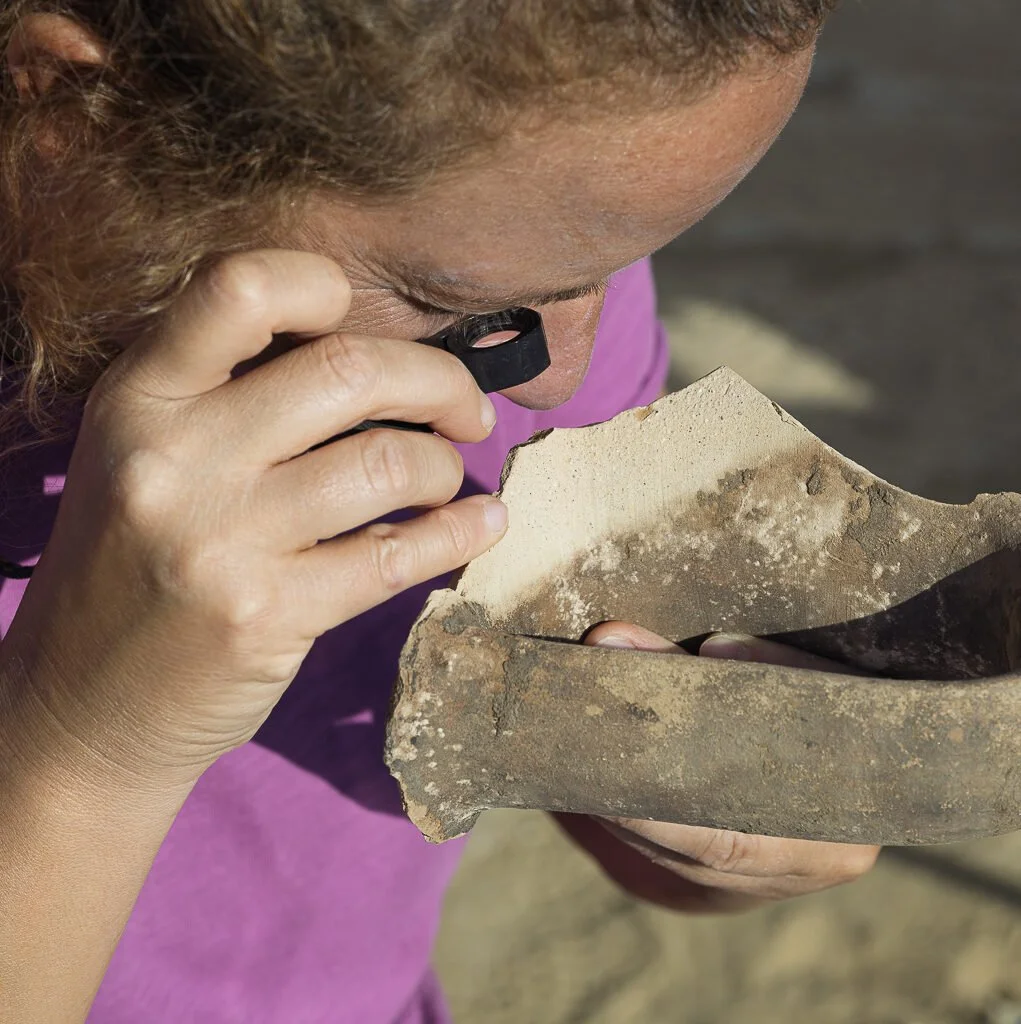
With practiced gestures, we separate body sherds from diagnostic pieces (rims, handles, bases — the fragments that allow the full shape of a vessel to be reconstructed), identify the fabrics, look for joins, and jot down first impressions. Next comes cataloguing, especially for the most “talkative” fragments, which are also drawn. Ceramic drawing is a crucial step in archaeological work, as it allows us to represent the original shape of fragments and vessels accurately and legibly. Through drawing, every detail — wall thickness, rim curvature, decoration — is rendered to scale using a standardized graphic language, making it possible to compare finds across sites.
It’s the first step in turning a pile of sherds into scientific data.
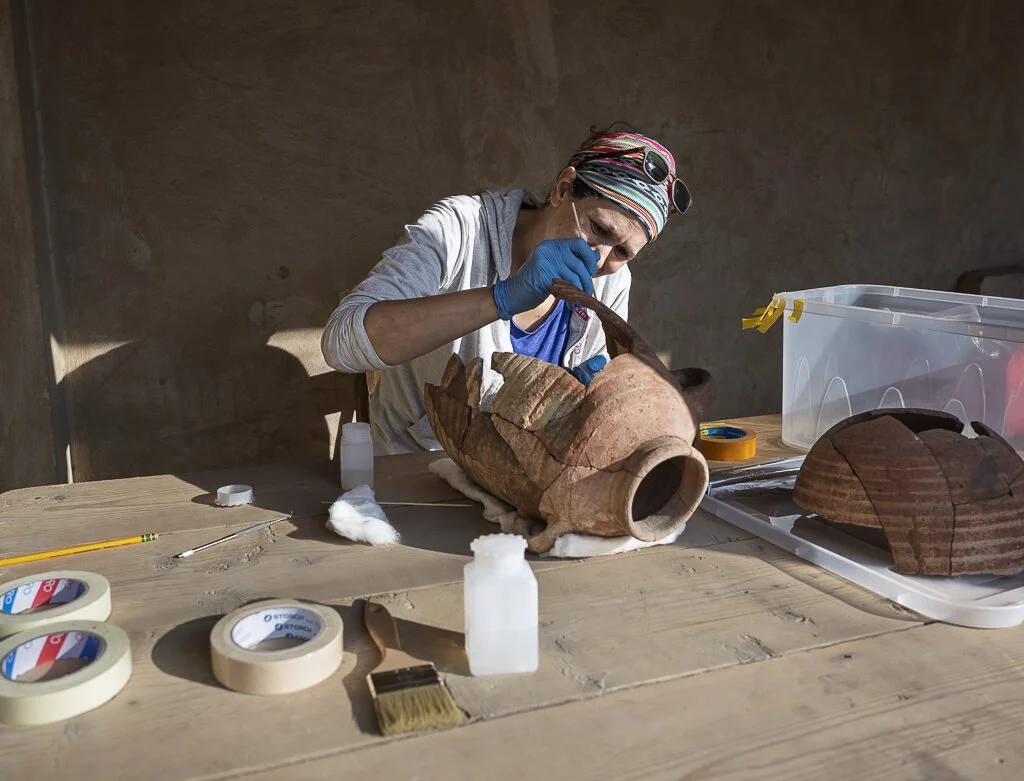
Nearby, the restorers reassemble joining fragments using a vinyl resin. It’s essential to ensure that they fit perfectly and stay in the correct position as they dry. No uneven surfaces should appear — only then can we restore the vessel’s integrity and its original appearance.
Pottery is the “guiding fossil” of archaeological excavation — a material that has accompanied humankind since the beginning, and which, precisely because of its ubiquity and variety, helps us identify chronologies, functions, and contexts. By analyzing fabrics, shapes, and decorations, we can understand not only when a space was in use, but also how it was lived in — from everyday activities to temple rituals. Try opening your own kitchen cupboards at home: do you have ceramic dishes too? What might they tell about you and your daily habits?
See you in the next field diary!