The Saqqara Digging Diaries 2025 - Third Week
Photography on Site: Capturing to Document
The weather has been changing these days in Saqqara: the light arrives earlier, and the days have turned unusually warm—almost humid. It’s strange for this time of year; the air should be cooling down. As a result, work on site has become more demanding: the sand is hotter, the air thicker.
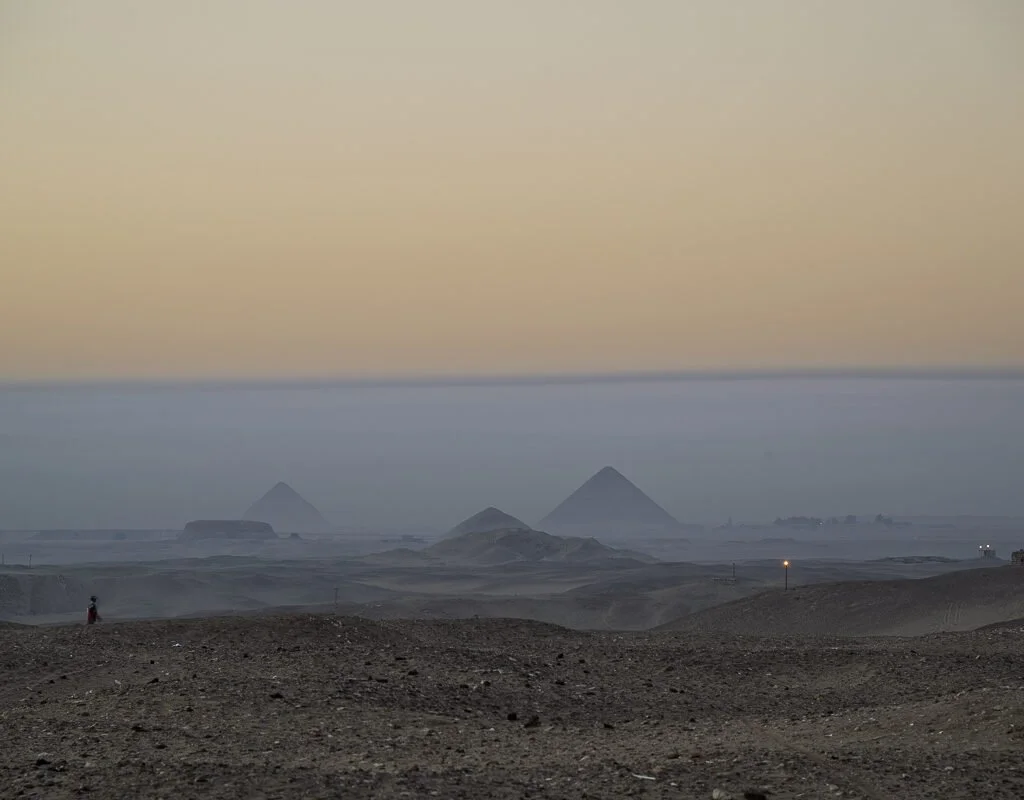
And yet, every morning we can’t help but marvel at the spectacle of dawn. The sky reinvents itself each day—sometimes blazing with vibrant colors, sometimes veiled in softer, pastel tones. It’s a moment that fills both the eyes and the heart. We’ll admit it: as soon as we step off the minibus, we always steal a few minutes before work begins to watch the light wash over the pyramids of Dahshur.
We’re now approaching the end of the mission—the fourth week will be the last—but that doesn’t mean we should rush. The work continues steadily and carefully, as always, layer by layer.
Excavation along the western perimeter of Panehsy’s tomb has paused for now: a new wall belonging to an unidentified structure has emerged, but there isn’t enough time left to explore it further. We’ll continue next year, inshallah. Our attention has now shifted east of Panehsy’s tomb, to the area of Yuyu’s chapel. Yuyu was an artisan specialized in producing gold leaf for the royal treasury. Although small in size, his chapel is decorated with remarkable finesse, depicting scenes of a funerary procession, the rebirth of the deceased, and the veneration of the goddess Hathor in the form of a cow as well as the boat of the god Sokar.
Right next to this chapel, in a section excavated two years ago, a small wall has come to light. Could it mark the edge of another, still unknown room—an additional chamber within Yuyu’s complex? To find out, we’re carefully removing the upper layers, the same ones dating back to excavations from the 1980s, gradually reaching the Late Antique levels and aligning them with the chapel’s elevation. As always, we start from the top and follow the stratigraphy, letting the ground tell its own story.
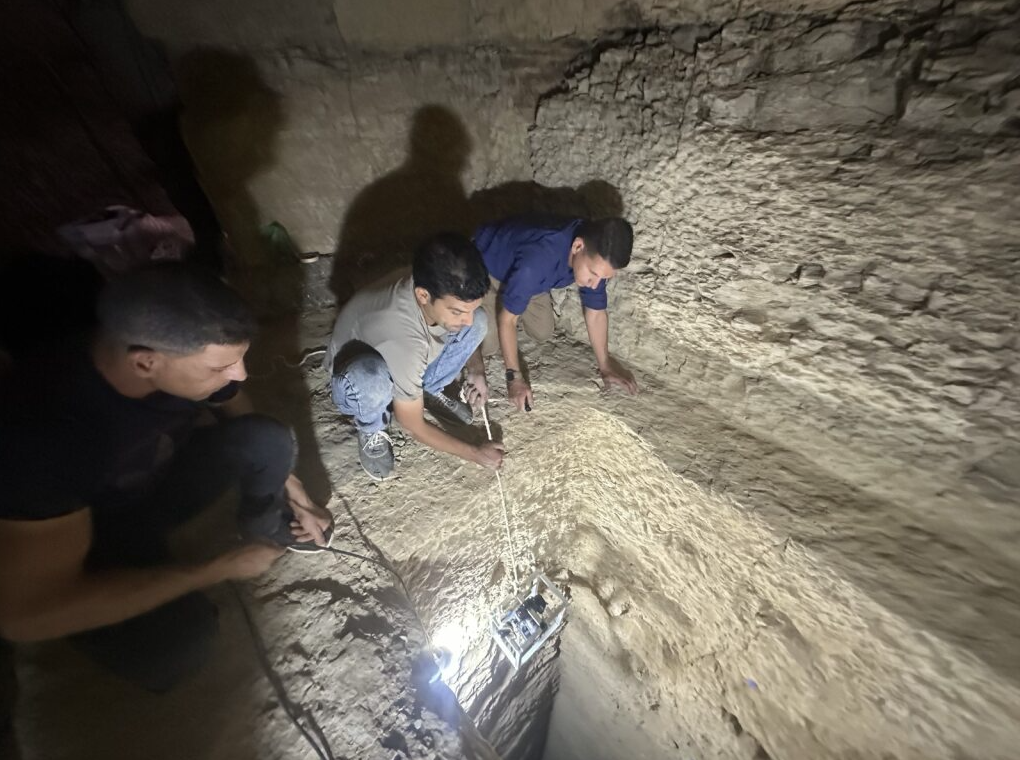
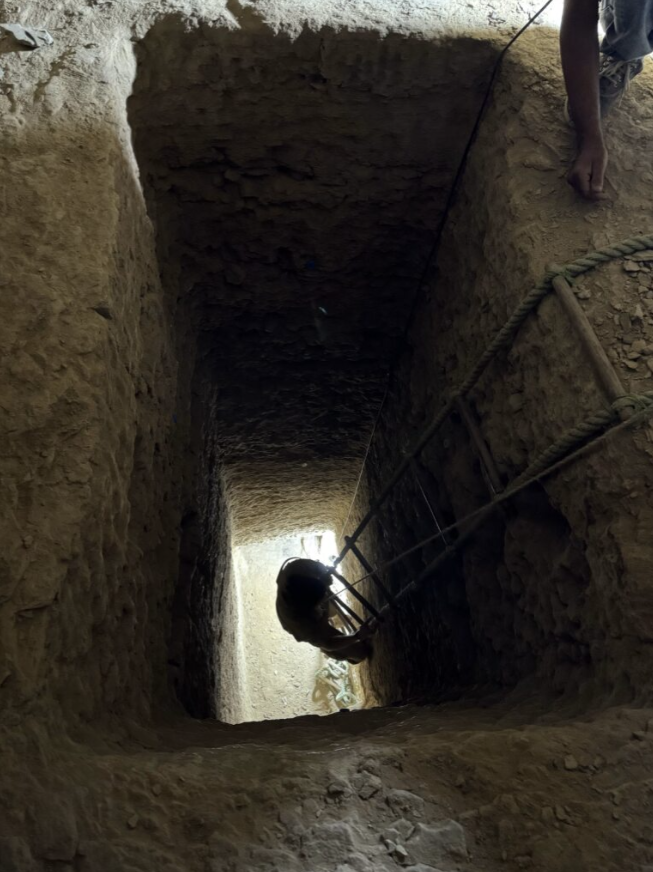
Meanwhile, the investigation of Panehsy’s shaft has been completed—it’s now fully cleared. And that means one thing: it’s time to document the entire structure, both above and below ground. This is where photogrammetry comes into play—a technique that transforms photographs into three-dimensional models, combining the act of photography with the precision of topographic survey.
Through a carefully planned sequence of shots—taken at different heights, angles, and perspectives—we create an archive of overlapping images. Specialized software processes them, calculates their spatial coordinates, and produces a 3D model accurate to the millimeter. In this way, we can “bring the tomb home,” explore it virtually, and study every detail from afar. Photogrammetry thus becomes a form of scientific memory—a way to preserve even the smallest trace of information.
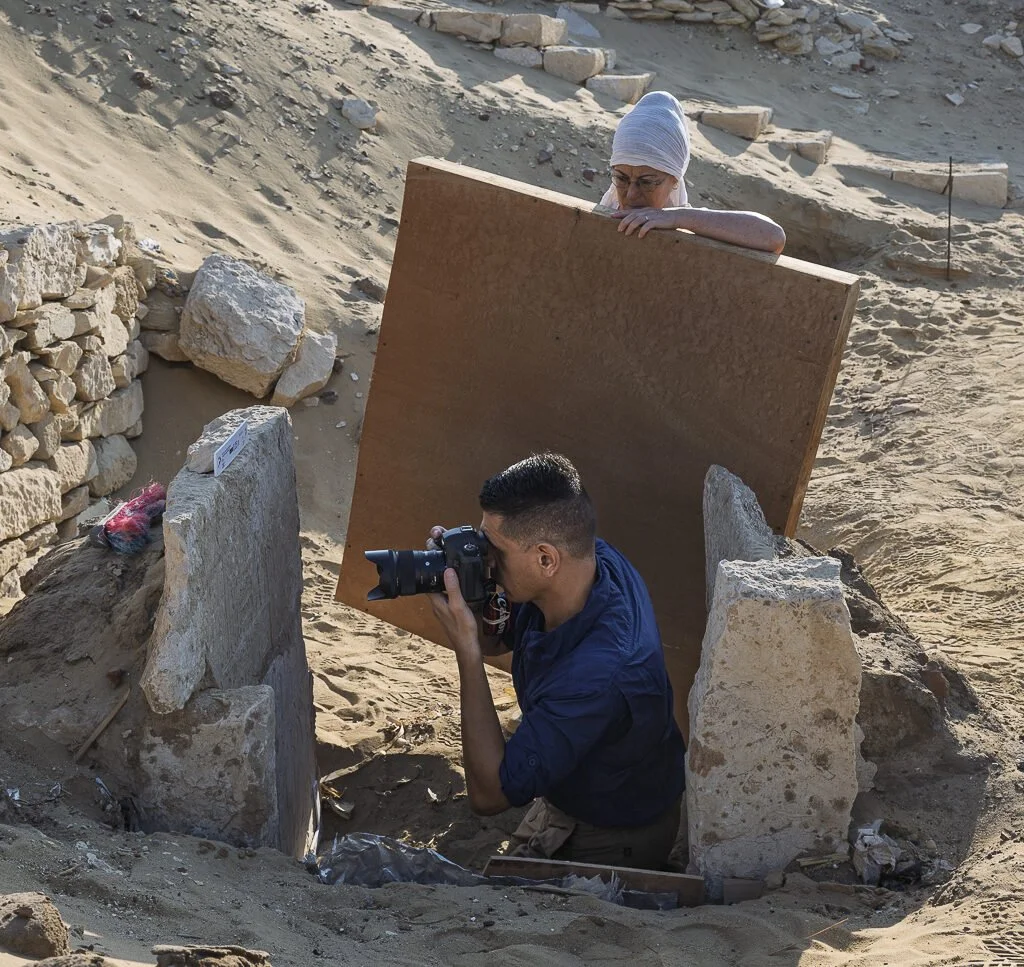
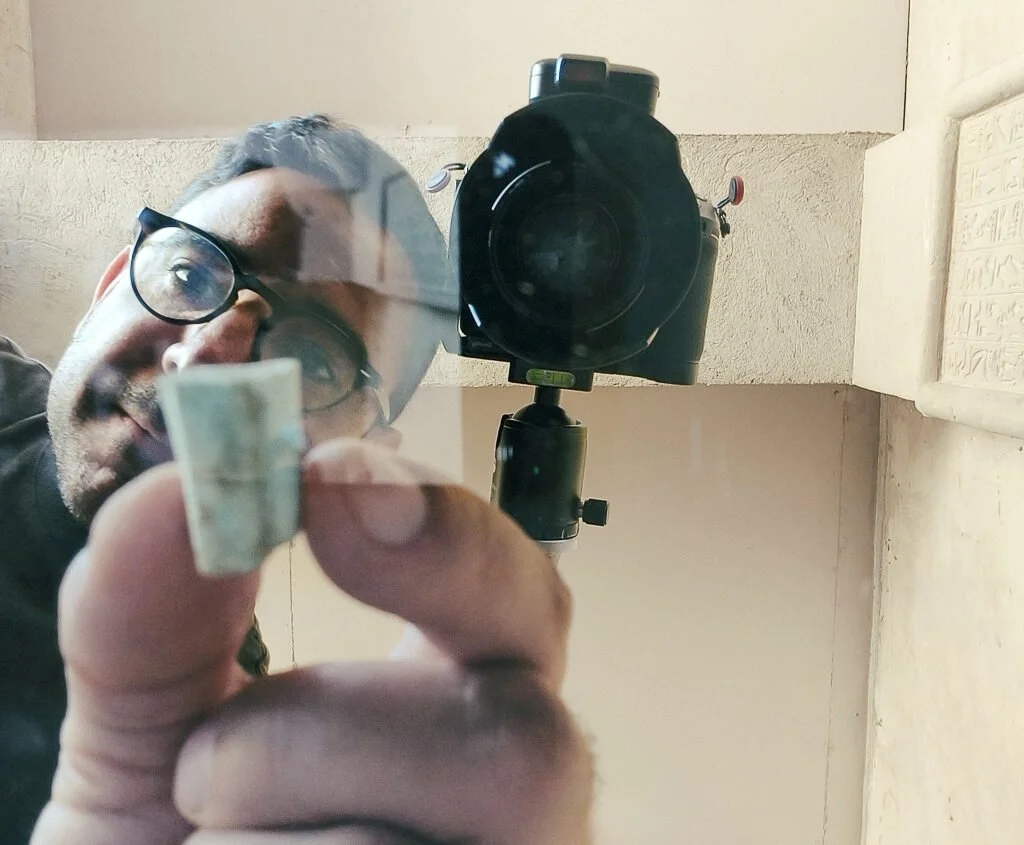
Every photograph carries crucial value during an archaeological excavation. On one hand, images preserve the memory of daily life on site and of the people who took part in it; on the other, they provide indispensable scientific documentation of the finds, their state of preservation, and their context—allowing them to be studied even from a distance.
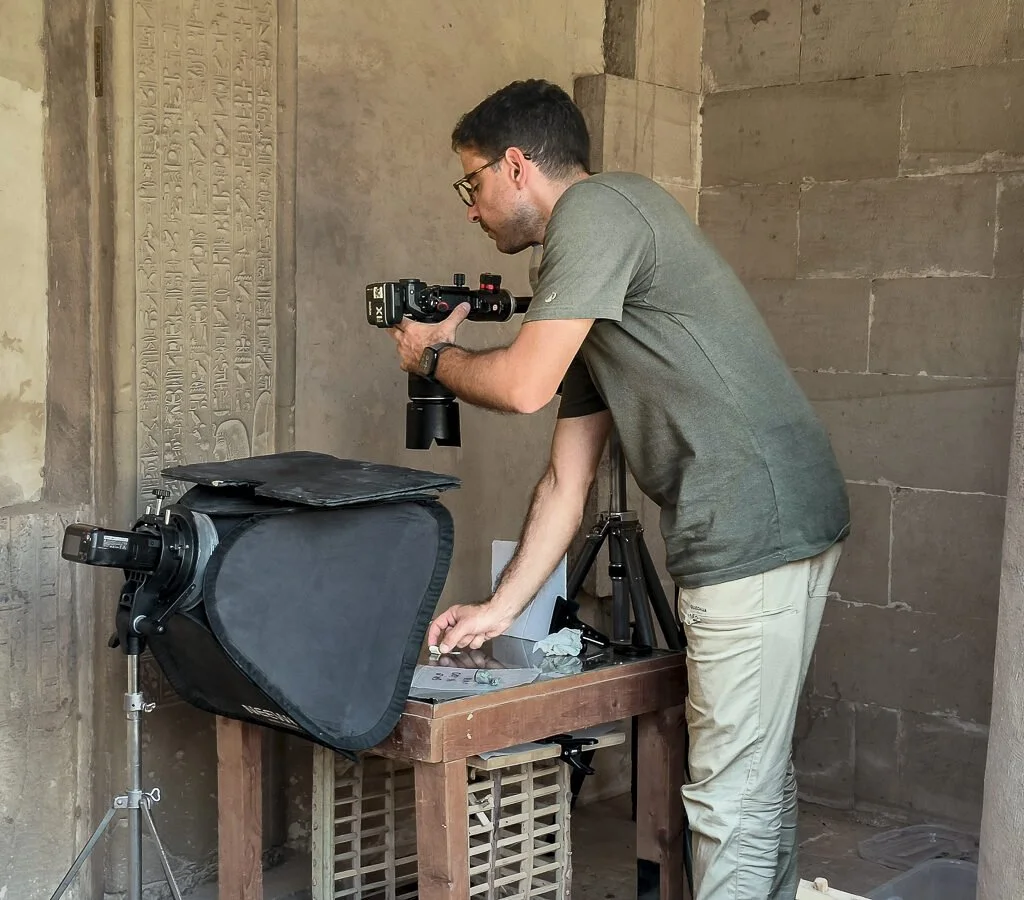
Photographing, for example, the reliefs of a tomb doesn’t just mean capturing an image—it also allows us to analyse and redraw them away from the site, though a final “face-to-face” check with the artifact is always essential. Photographic documentation is therefore an integral part of archaeological work, fundamental not only for research in the field but also for producing reports and scientific publications. The work of the field photographer is an exercise in both patience and creativity. A small studio must often be improvised: finding a stable surface, adjusting the lighting, building the right shadow, choosing a neutral background. Every detail matters—because the readability of the object depends on that photograph.
And the work doesn’t end there. Once back from the field, the second part of the process begins—selection, editing, color calibration, and archiving. It’s at this stage that the image becomes data, ready to interact with the drawings, measurements, and excavation records.
Because only what is documented can continue to tell its story.
See you Friday for the final chapter of the Saqqara Digging Diaries 2025.