


Events
Past and Future Events
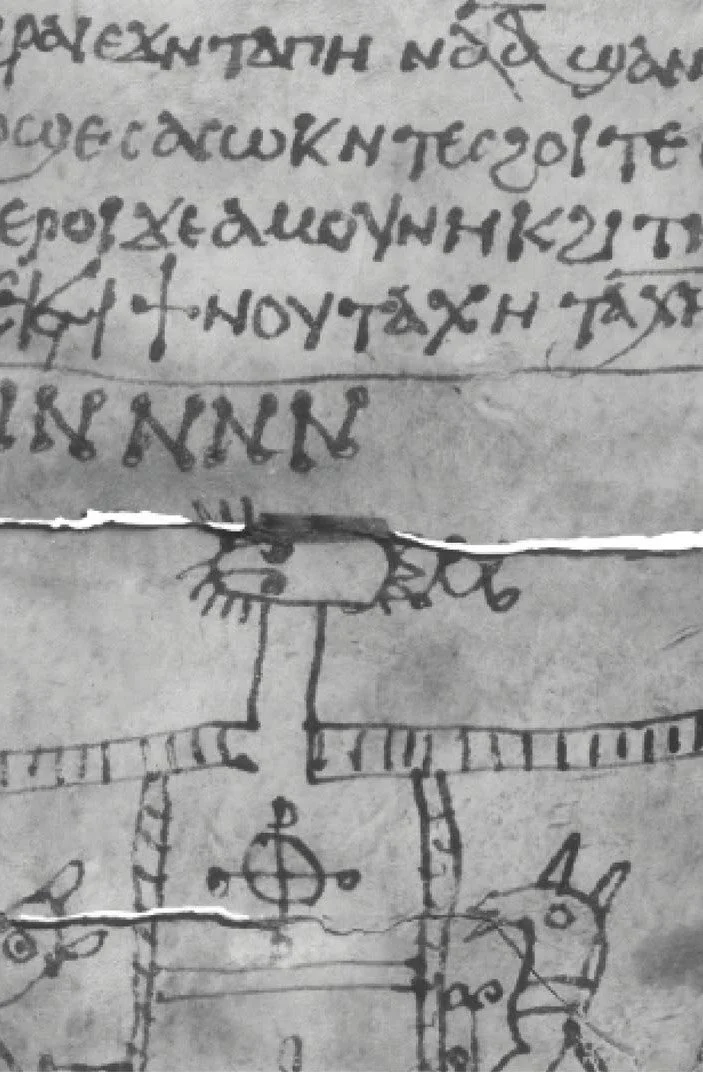
Coptic spells in the British Museum – Elisabeth R. O’Connell
On Tuesday, June 16 at 6 PM (CEST), in collaboration with ACME (Amici e Collaboratori del Museo Egizio) we will host a lecture held by Elisabeth R. O'Connell: "Coptic spells in the British Museum: a multidisciplinary approach to the materiality of magical practice"
The Hay archive of Coptic manuscripts consists of seven fragmentary sheets of leather bearing spells for divination, protection, healing, personal advancement, cursing and the satisfaction of sexual desire. Purchased from the heir of the famous early Egyptologist and draftsman, Robert Hay (1799–1863), the manuscripts arrived at the British Museum in 1869. A new study prompted by the urgent conservation needs of the corpus has sought to provide a model integrated approach to the publication of ancient texts as archaeological objects. Employing a striking combination of ancient Egyptian, Graeco-Roman, biblical and extra-biblical motifs, their contents represent a Christian milieu making use of the mechanics of earlier ‘magical’ practice in a period in Egypt well after the arrival of Islam.
Dr. Elisabeth R. O'Connell is Byzantine World Curator at the British Museum. She has edited or co-edited five books, including Egypt: Faith after the pharaohs (2015), which accompanied the BM exhibition by the same name, Abydos in the First Millennium (2020), Egypt and empire: The formation of religious identity after Rome (2022). Most recently, she was co-curator of the British Museum’s Silk Roads exhibition and co-author of the accompanying book (2024). She has conducted fieldwork in Tunisia, Sudan and Egypt, where she co-directed a British Museum Expedition from 2009 to 2013. Elisabeth has been principal investigator for multiple major grants, and held a number of fellowships in the UK, USA and Egypt. She received her PhD from the University of California, Berkeley.
The lecture will be broadcast via streaming on the Museum's YouTube channel.
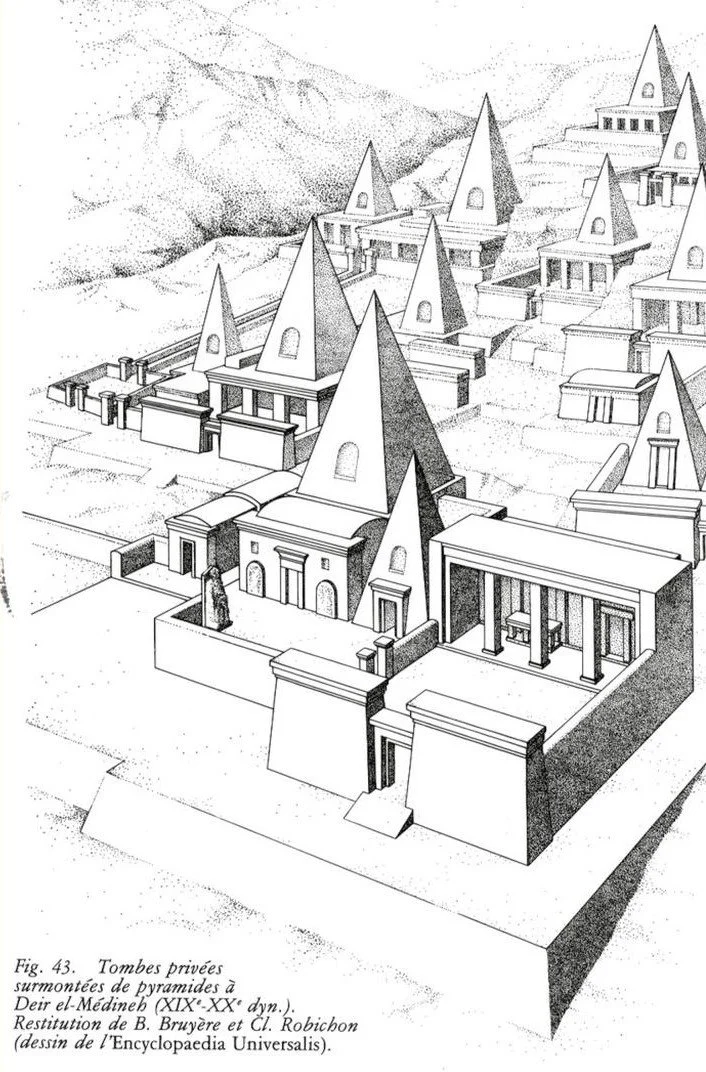
New gleanings from Deir el-Medina, from the IFAO Archive – Pierre Grandet
On Thursday, April 23 at 6 PM (CET), in collaboration with ACME (Amici e Collaboratori del Museo Egizio) we will host a lecture held by Pierre Grandet.
Since its inception in 1905 by Ernesto Schiaparelli, the excavation of the village of Deir el-Medina—especially from 1918 to the present day by the Institut Français d’Archéologie Orientale—has produced a wealth of ostraca (ca. 20,000), written in hieratic on slabs of limestone or pottery sherds. About half of this number (the remainder consisting of literary and figurative ostraca) documents, in every conceivable way, the life and work of the inhabitants of the village: a community of workmen commissioned by the kings of the New Kingdom to excavate and decorate the royal and princely tombs in the Valley of the Kings and the Valley of the Queens. The lecturer, who has been entrusted by the Institut Français d’Archéologie Orientale with publishing these documents (six volumes published so far), aims to present some of the insights that can be gleaned from this archive and to enrich our understanding of everyday life in ancient Egypt.
Pierre Grandet is born in 1954. He obtained his doctorate in egyptology at the Sorbonne University in Paris (Paris IV) in 1984, with a translation and commentary of the Papyrus Harris 1 of the British Museum, published in 1994 by the IFAO with a volume of Glossary in 1999. He obtained his qualification à diriger des recherches in 1999. He has taught History, Civilization and Egyptian Language at the Kheops Institute in Paris between 1986 and 2023, at the Université Catholique de l’Ouest at Angiers between 1987 and 2010, at the Université of Poitiers between 2010 and 2011, and at the University of Lille in 2015-2016 and 2019-2020.
He has also taught hieratic at the École pratique des Hautes-Études, IVe Section, between 2004 and 2010. He retired in 2023, but has pursued since a teaching activity as a member of the Collective Kheops. Since 1997, he has been entrusted with the publication of the hieratic non-literary ostraca of the IFAO and has published six volumes to date. Since 2006, he has also been preparing, for the Musée du Louvre, the publication of the ostraca from the former Varille Collection, which is currently in press. He is the author of various articles and books reflecting his research in his other areas of interest, such as the history of Ramesside Egypt.
The lecture will take place in our Conference Room, admission is free with a reservation on Eventbrite. Click HERE to book your place.
The lecture will be broadcast via streaming on the Museum's YouTube channel.
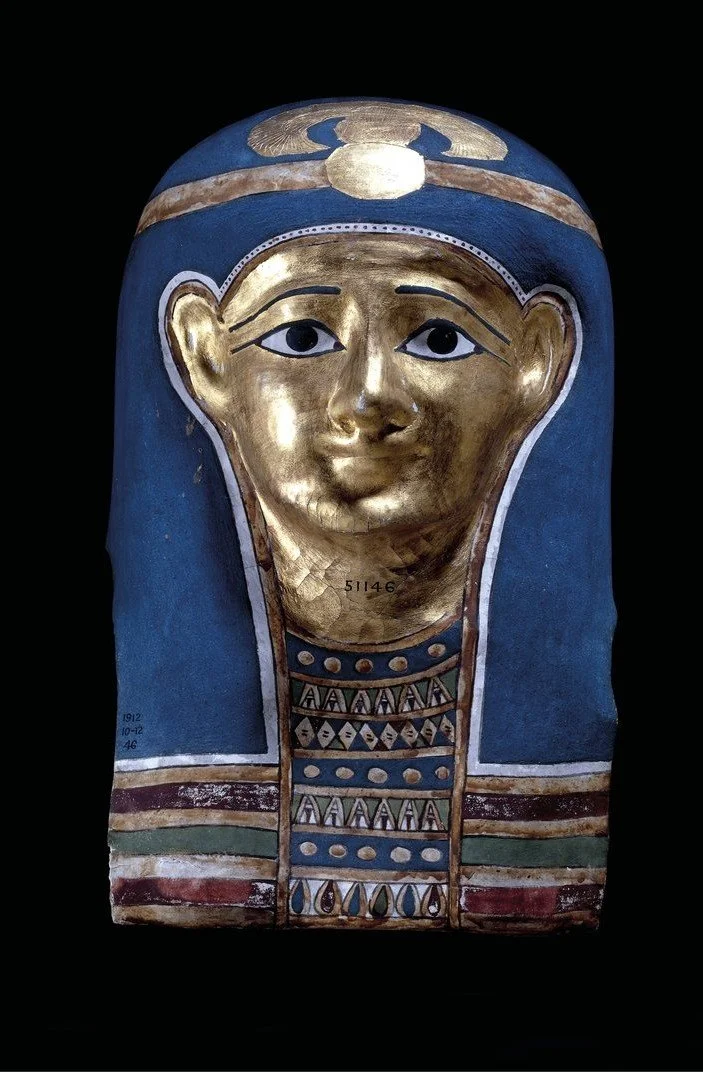
Beyond the visible: scientific approaches to ancient Egyptian funerary culture – Marie Vandenbeusch
On Tuesday, March 31 at 6 PM (CET), in collaboration with ACME (Amici e Collaboratori del Museo Egizio) we will host a lecture held by Marie Vandenbeusch.
Since 2014, the British Museum has developed several temporary exhibitions focusing on the lives and deaths of ancient Egyptian mummified individuals. These exhibitions have provided unique opportunities to research these human remains and the funerary goods buried with them. This presentation will offer an overview of some of the scientific techniques using in these various projects, including a range of imaging, bioarchaeological and molecular analyses. This interdisciplinary approach has deepened our understanding of who these individuals were, how they lived, what they believed and how they were prepared for the afterlife. It also allows us to gain new insights into the manufacture and production of masks, portraits, shrouds and coffins. By placing both the objects and the people who made them back into their socio-economic context, we can explore the funerary industry in terms of trade, reuse and, above all, exceptional craftsmanship.
Marie Vandenbeusch is a curator in the Department of Egypt and Sudan at the British Museum, where she is responsible for the collection of funerary culture of the Nile Valley. She has served as lead curator of several exhibitions, including Pharaoh. Power and art in ancient Egypt (2024) and Egyptian mummies. Exploring ancient lives (2016-2024). She currently leads the project Divine Creatures. Researching animal mummies in ancient Egypt (2024-2027). Marie holds a PhD from the University of Geneva (her monograph L’âne dans la religion égyptienne was published in 2020 by Sidestones) and has previously worked in various UK and Swiss museums. Her research interests include funerary and magical practices in ancient Egypt, with particular emphasis on mummies and material culture, as well as the history of Egyptology and collecting.
The lecture will take place in our Conference Room, admission is free with a reservation on Eventbrite. Click HERE to book your place.
The lecture will be broadcast via streaming on the Museum's YouTube channel.
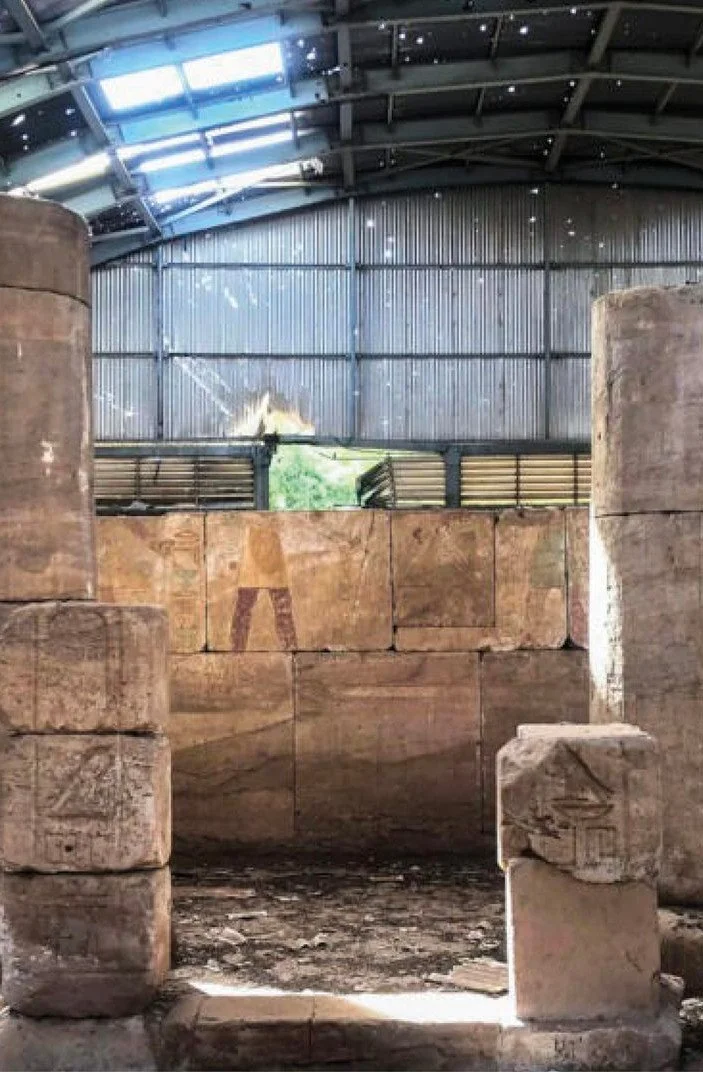
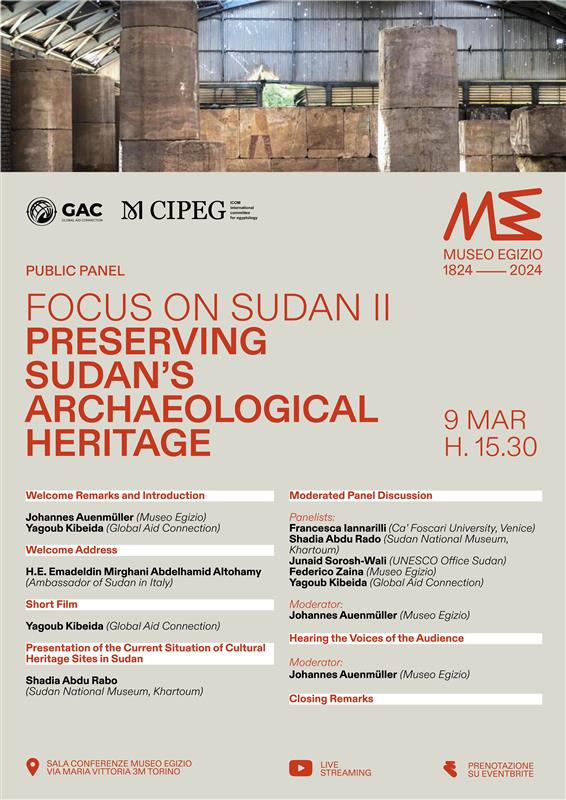
Focus on Sudan II – Preserving Sudan’s Archaeological Heritage
On March 9, 2026 at 3:30 PM (CET), the international roundtable “Focus on Sudan II – Preserving Sudan’s Archaeological Heritage” will take place in our conference hall. The event is organized by the Museo Egizio in collaboration with Global Aid Connection (GAC) and the International Committee for Egyptology (CIPEG).
The initiative represents the second event in the “Focus on Sudan” series, launched in December 2023, and was conceived in response to the severe cultural emergency affecting Sudan since April 2023.
A heritage in danger: why speak about it today
Sudanese museums, archives, libraries, and archaeological sites are facing systematic looting, destruction, and occupation by armed groups. The consequences are dramatic: the destruction and burning of major museum collections, the occupation of archaeological sites, the theft of manuscripts and historical archives, and the dispersal of the national cultural heritage.
In response to this situation, the Museo Egizio reaffirms its commitment as a place of research, protection, and international cooperation, opening a public space for dialogue and awareness.
An international discussion on the protection of Sudanese heritage
The event will feature:
H.E. Emadeldin Mirghani Abdelhamid Altohamy (Ambassador of Sudan to Italy)
Johannes Auenmüller (Museo Egizio)
Francesca Iannarilli (Ca’ Foscari University of Venice)
Shadia Abdu Rado (Sudan National Museum, Khartoum)
Junaid Sorosh-Wali (UNESCO Office Sudan)
Federico Zaina (Museo Egizio)
Yagoub Kibeida (Global Aid Connection)
At the heart of the discussion is the key question: “How can Sudanese and international institutions collaborate to protect, document, and promote Sudan’s cultural heritage during and after the conflict?”
The meeting therefore has a twofold objective:
• To analyze the current losses and risks threatening Sudan’s archaeological and cultural heritage.
• To identify concrete strategies for action, including: emergency site protection, documentation and digitization, digital preservation, fundraising for medium-term projects, advocacy, and international cooperation.
The Museo Egizio invites all those interested in cultural heritage protection and international archaeology to take part in this important moment of scientific and civic dialogue.
The detailed program of the meeting can be downloaded here.
Participation in the event is free of charge upon registration. Click HERE to book your place.
It is also possible to follow and participate in the discussion via streaming on your YouTube channel.
Osiris in the temples of Kush – Angelika Lohwasser
On Tuesday, February 10 at 6 PM (CET), in collaboration with ACME (Amici e Collaboratori del Museo Egizio), we will host a lecture held by Angelika Lohwasser.
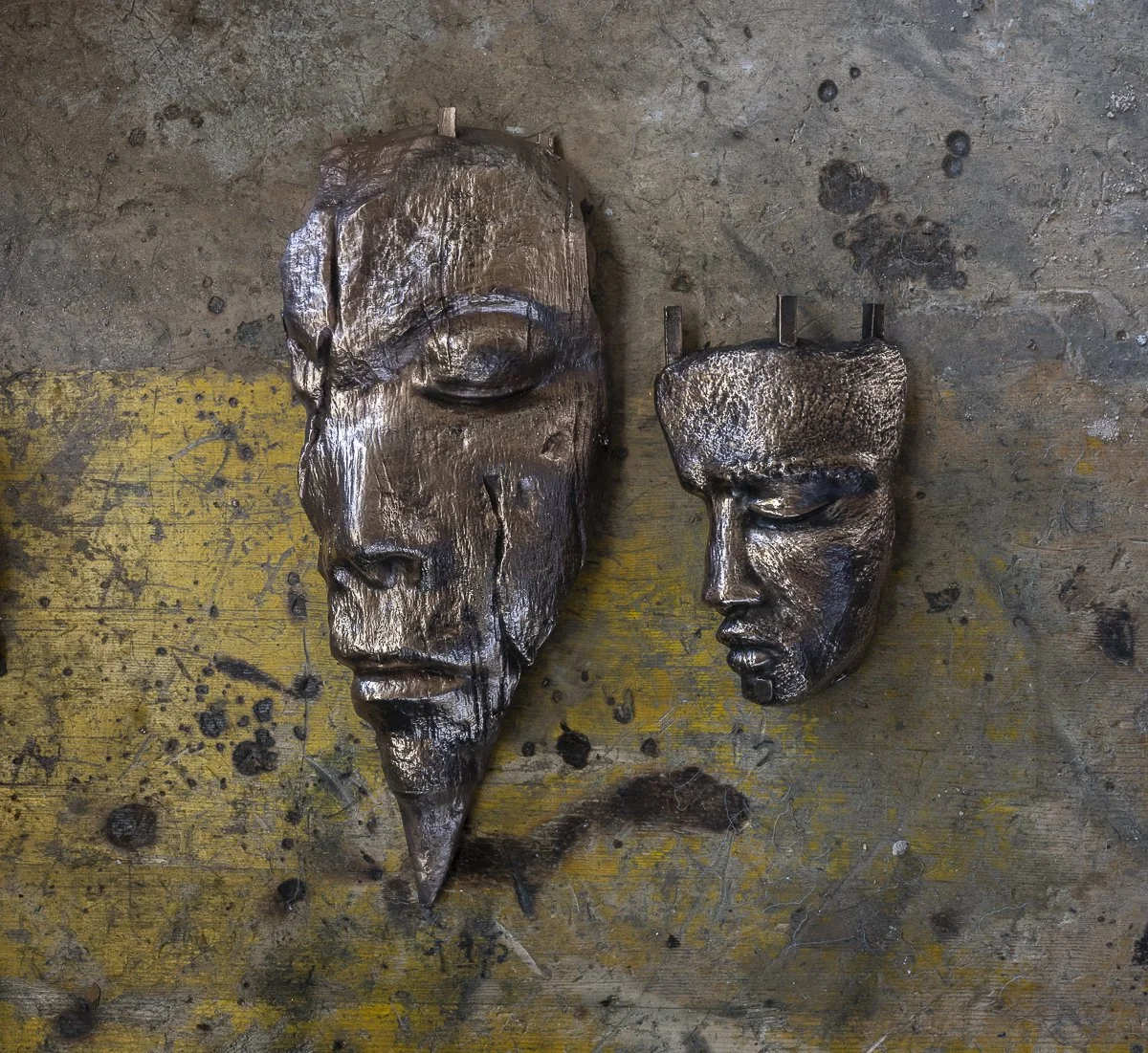
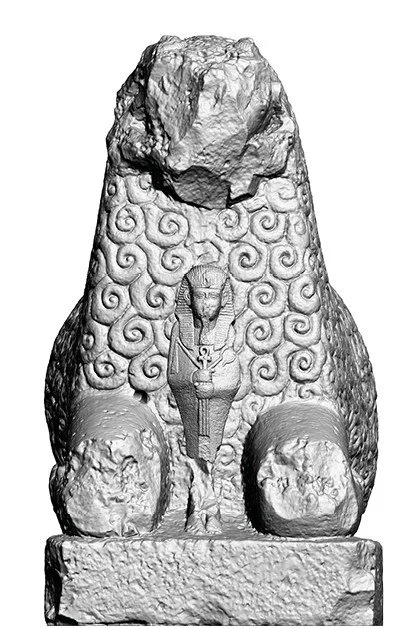
The lecture focuses on the god Osiris in Kush (ancient Nubia) in the 1st mill. BCE, where he is on one hand the god of the afterlife, but on the other associated with the deceased king. For example, he appears in Meroitic pyramid chapels, represented in the form of a combination of Osiris as a deity and the earthly king. Another significant aspect to consider are the small bronze figures of Osiris that have been discovered in almost all Amun temples in Nubia. They suggest that a special ritual involving Osiris was performed within these sanctuaries. Additionally, textual evidence points to a close connection between Osiris and Amun. As the deceased king, Osiris is the royal ancestor of all subsequent rulers, a role that anchors him in the legitimization and transmission of the kingship of Kush. Amun, as the supreme "state god" of the Kushites, selects and crowns the king, while Osiris, as his divine predecessor, accepts the ruler into the line of succession.
Angelika Lohwasser studied Egyptology, Sudan archaeology and Archaeology at the University of Vienna, Austria. Her thesis discussed the queens of Kush (8th–4th cent. BCE) and her habilitation focused on the cemetery of Sanam, a non-royal burial ground in northern Sudan, dated to the 8th/7th cent. BCE. Since 2009 she is full professor for Egyptology at the University of Muenster (Germany) and director of archaeological fieldwork in the Bayuda desert. Her publications deal with various culture-historical, historical and archaeological aspects of the cultures of Ancient Sudan and Late Period Egypt. She is PI in the Cluster of Excellence “Religion and Politics” and researches on the relationship between kingship and the main gods of Kush (8th cent BCE to 4th cent CE).
Click here to watch the lecture again on YouTube.
New discoveries of the Swiss-French Archaeological Mission at Saqqara – Philippe Collombert
On Tuesday, January 20 at 6 PM (CET), in collaboration with ACME (Amici e Collaboratori del Museo Egizio) we will host a lecture held by Philippe Collombert.
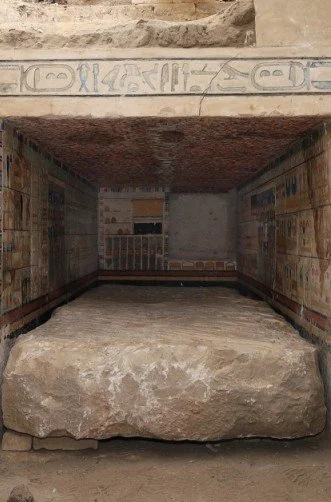
The Swiss-French Archaeological Mission at Saqqara has been working for years in the royal necropolis located 30 kilometres south of Cairo. After excavating the pyramid of Pharaoh Pepi I (c. 2310-2260 BC) and discovering the funerary complexes and pyramids of eight of his wives, most of whom were previously unknown, the Mission set itself a new goal in 2022: to excavate the necropolis of the kingdom's great administrators (viziers, chiefs of works, etc.) during the reign of King Pepi I. This group of once-monumental tombs is now buried under 6 metres of sand. From the start of the excavations, the Mission discovered the remains of the tomb of one of the most famous high officials of King Pepi I’s reign: the ‘Chief of the South’ Weni. This man is best known in Egyptology for having engraved the longest autobiography of that period in another tomb in Abydos, more than 500 kilometres south of Saqqara. The talk will also focus on some spectacular and unexpected new discoveries.
Philippe Collombert studied Egyptology in Paris (École du Louvre and École Pratique des Hautes Études), where he obtained a PhD in Egyptology in 2000. He was then appointed Scientific Member of the French Institute of Oriental Archaeology (Cairo 2000-2003). He is Professor of Egyptology at the University of Geneva and Director of the Swiss-French Archaeological Mission at Saqqara since 2008. He is a specialist in ancient Egyptian writing and ancient Egyptian religion.
Click here to watch the lecture again on YouTube.
NYMPHAEA: A visual survey on yellow coffins – Rogério Sousa
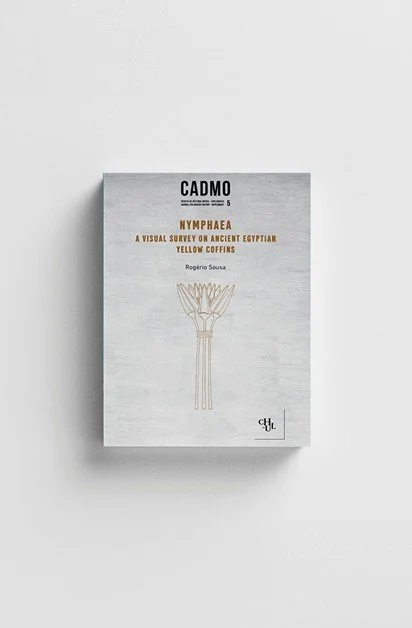
On Friday, January 9 at 6 PM (CET), join us in the Conference Room* for the presentation of the book NYMPHAEA: A visual survey on ancient Egyptian yellow coffins.
Yellow coffins form one of the largest and more intriguing corpus of Ancient Egyptian body containers. In terms of pictorial decoration, they excel in quality and levels of complexity, forming a unique art historical phenomenon. This book proposes an innovative approach for the examination of the visual culture displayed in these objects with a view not only to carry out an ‘iconographic mapping’ of the repertoire used in the several components of the yellow coffins but also to understand how and why they evolved along the 21st Dynasty. Ultimately this examination helps us to unravel the several layers of meaning displayed in these objects and to foresee the sociopolitical role they played in the Theban society of the 21st Dynasty.
Rogério Sousa is Professor of Egyptology and Ancient History at the Faculty of Humanities of the University of Lisbon and coordinates several projects related to Heritage Studies in Egyptology. Since 2009 he has been engaged in the study of yellow coffins, with a particular focus on those uncovered in the Tomb of the Priests of Amun (Bab el-Gasus) in Thebes. He coordinates the Gate of the Priests Project set up in 2013 aiming at the study and publication of the antiquities found in this archaeological site. He is Co-Editor of the Gate of the Priests Series published by Brill and has authored and edited various works on this subject.
Click here to watch the lecture again on YouTube.

The tomb of Nefertari. Encountering the queen – Tarek Tawfik
On the occasion of the inauguration of the new hall of the Museo Egizio for the burial items of Queen Nefertari's tomb, discovered 120 years ago, we invite you to join us on August 9, 2024, at 6:00 PM for a special lecture by Tarek Tawfik (Cairo University).
Queen Nefertari must have been an exceptional woman. During the reign of king Seti I she gets married to prince Ramesses and then manages to remain the "chief royal wife" of Ramesses the Great until her death. Cuneiform letters disclose her role in foreign diplomacy with the Hittites and her prominent appearance in the large temple adjacent to the huge temple of Ramsses II at Abu Simbel highlight her involvement in showing political supremacy towards the southern borders of Egypt. Details in her extraordinarily beautifully decorated tomb (QV66) allow a close encounter with this queen who captivated the heart of Ramesses II. Let us dive into the world of Nefertari to better understand the architecture of her tomb and the religious scenes reviling a lot about the art and lifestyle during the life of one of the most famous royal wives of the New Kingdom. It must have been challenging for the artisans of Nefertari's time to produce this amazingly decorated tomb but it is also challenging for us today to preserve it for future generations to admire.
Lecture available via streaming on the Egyptian Museum's Facebook and YouTube channels, live and recorded.
Click HERE for the live




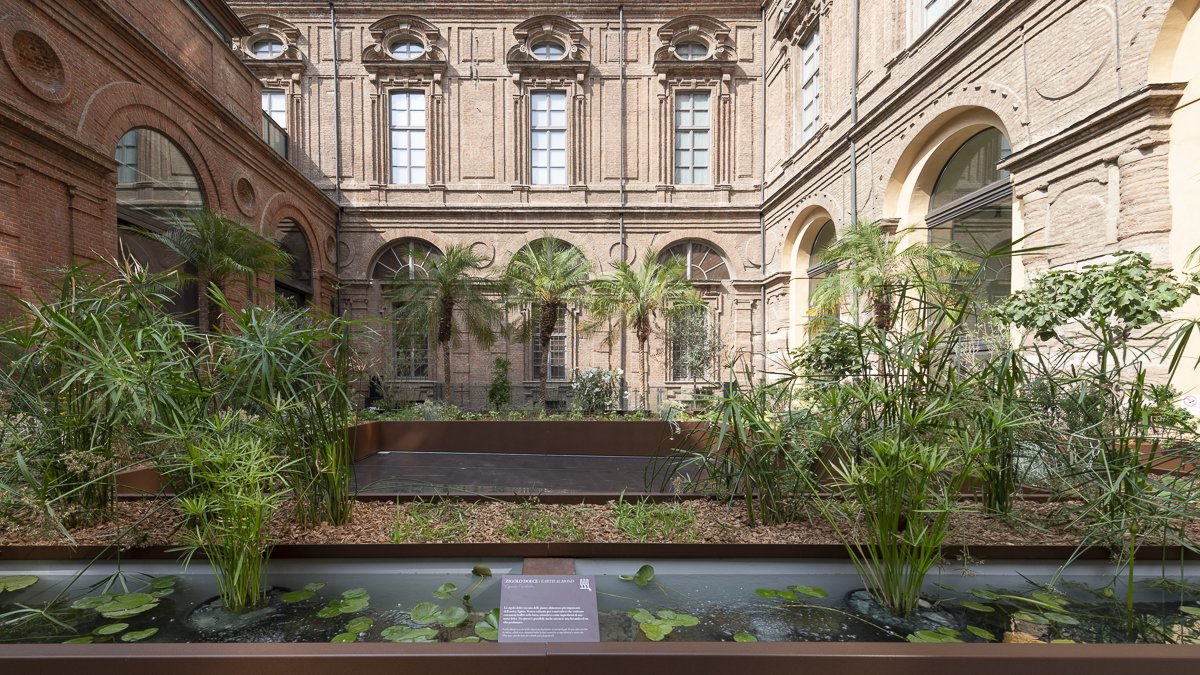


Learn How to Grow an Ancient Egyptian Garden

Join us for a behind-the-scenes look at the making of Museo Egizio’s Egyptian garden, all from the comfort of your own home!
The garden opened at the museum in June, and we are eager to tell you more about the significance of gardens in ancient Egypt and the science that went into creating this garden from the Museo Egizio team who brought it to life.
Featured speakers include:
Johannes Auenmüller
Curator
Johannes Auenmüller is curator at Museo Egizio since January 2020. He holds a PhD in Egyptology from Freie Universität Berlin. Johannes did research on bronze casting technology and on the social fabric of New Kingdom Egypt and Nubia, taught at the universities of Berlin, Leipzig, Bonn, Münster and Munich, and participated in archaeological excavations in Austria, Egypt and the Sudan.
His main areas of interest include the sociology and regional prosopography of pharaonic Egypt, technology of metal production and casting, as well as rock inscriptions and graffiti in ancient Nubia. Recently, his interests have been widened due to his engagement in curating the Egyptian garden in the courtyard of the Museo Egizio
Divina Centore
Egyptologist
Divina Centore obtained her MA degree from the University of Pisa, with a thesis on the importance of archaeological contexts and their reassemblage. At the Museo Egizio, she is currently working in the Communication Office. She manages the website and the scientific contents produced by this office. She is part of the editorial team of the Rivista del Museo Egizio and she is the contact person for the activities organised at the museum by the ACME Association. Her study interests focus on pottery, late Middle Kingdom, Second Intermediate Period and the flora of Ancient Egypt.
Cédric Gobeil
Curator, AFME Liaison
Cédric Gobeil is a Canadian and French Egyptologist born in Quebec City (Canada), specializing in archaeology of daily life and New Kingdom material culture, with a primary focus on Deir el-Medina, topics for which he is carrying annual fieldwork in Egypt and Sudan.
After having obtained his PhD in France (Université Paris IV-Sorbonne), he worked in Egypt for the Institut français d’archéologie orientale du Caire and in the United Kingdom for the Egypt Exploration Society, where he was introduced to fundraising, before being appointed curator at the Museo Egizio in Turin in 2019.
In addition to his curatorial duties, he is also adjunct professor in the History Department at the Université du Québec à Montréal and research associate at the HiSoMA Research Unit in Lyon (CNRS)
Register today to receive your personal Zoom link!

Nefertari: Queen of the Nile

Queens of Egypt tells the story of the wives of the pharaohs under the New Kingdom (1500 - 1070 BC).
In this period queens such as Ahmose Nefertari, Hatshepsut, Tiye, Nefertiti and Nefertari were influential women and much more than the wives of rulers. They also administered the pharaoh’s palace and exercised significant political power.
The exhibition brings to life the riches offered to the royal women, it reveals the intrigues they were involved in and recounts the honors paid to them.
Its highlight is the series of works that come from the tomb of Queen Nefertari, one of the greatest pictorial expressions of Ancient Egypt.
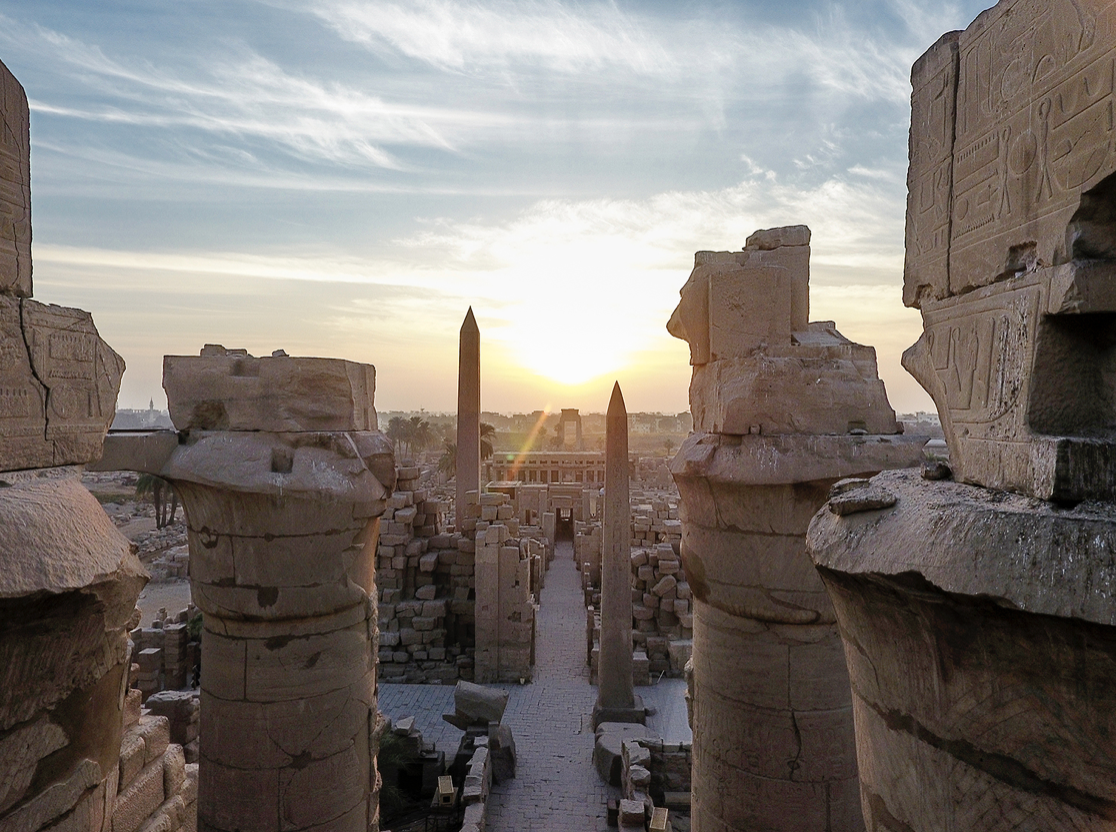
The Anastylosis of an Ancient Monument: Evaluating the modern Reconstruction of The Hypostyle Hall at Karnak – Jean Revez

On Tuesday 26th October 2021, at 12pm (UTC-04:00), in collaboration with ACME (Amici e Collaboratori del Museo Egizio) we will host the online lecture The Anastylosis of an Ancient Monument: Evaluating the modern Reconstruction of The Hypostyle Hall at Karnak, (Karnak Hypostyle Hall Project, 2017-2021) held by Jean Revez.
Since 2011, the Université du Québec à Montréal (UQAM) – University of Memphis joint epigraphic mission at Karnak has been studying the decoration carved on the 134 columns that originally stood inside the Hypostyle Hall of the temple of Amen-Ra at Karnak. Since the beginning of our project, funded by the Social Sciences and Humanities Research Council of Canada (SSHRC) and other agencies, we have been able to gain a much better understanding of the decoration layout and chronology with the help of emerging techniques.
One of the greatest challenges in studying the Hall is taking into consideration the fact that a certain number of columns now standing inside the monument are no longer in their original position, since some mistakes in their reconstruction were made in the early 20th century, when Georges Legrain, the former director at Karnak courageously took on the daunting task of re-erecting most of the fallen columns that had collapsed in 1899 and at earlier times. Another great challenge is putting back together the loose drums and abaci that lay outside of the monument. These blocks, sometimes in fragmentary state, are stored in various areas inside the precinct of Amun-Ra. The main objective of the conference is to present our project, with a focus on the principal results of the ongoing anastylosis study of the columns, carried out during the past three fieldwork seasons (2017-2019).
Jean Revez is professor at the History Department of the University of Quebec in Montréal (UQÀM). He has a B.A. in liberal arts and pursued graduate studies in Egyptology at the University of Heidelberg, and completed his Ph.D. at the University of Paris-Sorbonne. He has worked extensively in Egypt, most notably at Karnak, where he joined the permanent French mission of the CNRS, as well as excavation teams from the University of Toronto. He is currently the co-director of the joint UQÀM-University of Memphis epigraphic mission at Karnak. Professor Revez's research interests cover kingship and royal ideology, Nubian’s cultural inheritance of Egyptian Civilization, as well as new approaches to computerized methods of epigraphic survey of Egyptian monuments.
The event will be held in English and will be introduced by Cédric Gobeil, Curator at the Museo Egizio.
Here the link to watch the event on YouTube.

Nefertari: Queen of the Nile

Queens of Egypt tells the story of the wives of the pharaohs under the New Kingdom (1500 - 1070 BC).
In this period queens such as Ahmose Nefertari, Hatshepsut, Tiye, Nefertiti and Nefertari were influential women and much more than the wives of rulers. They also administered the pharaoh’s palace and exercised significant political power.
The exhibition brings to life the riches offered to the royal women, it reveals the intrigues they were involved in and recounts the honors paid to them.
Its highlight is the series of works that come from the tomb of Queen Nefertari, one of the greatest pictorial expressions of Ancient Egypt.

The Museo Egizio’s current research at Deir El-Medina – Cédric Gobeil

On Thursday June 17th at 12pm (UTC-04:00) the Museo Egizio will host the online conference "The Museo Egizio’s current research at Deir El-Medina", held by the museum's curator Cédric Gobeil.
Within the framework of the French Archaeological mission at Deir El-Medina carried by the IFAO, the Museo Egizio of Turin is conducting research on a few Ramesside tombs located in the Western necropolis. These tombs have been chosen based on the many artifacts that belonged to the owners of these tombs and are now kept in the museum. In addition to giving the opportunity to perform a study on these fragile structures using new technologies, this fieldwork is a unique chance to recontextualize many objects of the museum’s collection by shedding a new and fresh light on them. During this talk, viewers will have the chance to get a first glimpse at this work in progress.
Cédric Gobeil is a Canadian and French Egyptologist born in Quebec City (Canada), specializing in archaeology of daily life and New Kingdom material culture, with a primary focus on Deir el-Medina, topics for which he is carrying annual fieldwork in Egypt and Sudan. After having obtained his PhD in France (Université Paris IV-Sorbonne), he worked in Egypt for the Institut français d’archéologie orientale du Caire and in the United Kingdom for the Egypt Exploration Society, before being appointed curator at the Museo Egizio in Turin in 2019. In addition to his curatorial duties, he is also adjunct professor in the History Department at the Université du Québec à Montréal and research associate at the HiSoMA Research Unit in Lyon (CNRS).
The event will be held in English and it will be broadcast via streaming on the Museum's Facebook page and Youtube channel.
Here the link to the live streaming on YouTube.

From the Museum back to the tomb – Lecture held by Rita Lucarelli

On Tuesday June 8th at 12 pm (UTC-04:00) the Museo Egizio, in collaboration with ACME (Associazione Amici e collaboratori del Museo Egizio), will host the online conference "From the Museum back to the tomb: the virtual rejoining of a sarcophagus and its burial in 26th Dynasty Saqqara", held by professor Rita Lucarelli.
The Late Period inner sarcophagus of “chief physician” and “overseer of the Temehu (Libyan mercenaries)” Psamtek, found in 1900 in Psamtek’s tomb south of the Unas pyramid at Saqqara, is now on public display in the Phoebe A. Hearst Museum of Anthropology in Berkeley, California (PAHMA 5-522). Like many museum objects, its modern display cannot adequately replicate aspects of its original archaeological context — in a deep rock-cut shaft, nestled among hundreds of impressive elite tombs at the necropolis. In order to virtually re-place the sarcophagus in its original context, a joint team from the University of California, Berkeley and Santa Cruz, is developing a dynamic VR-headset experience that combines a 3D reconstruction model of Saqqara with a photogrammetric model of the sarcophagus. In this presentation, I will provide a demo of the VR headset application (under development), present the “Book of the Dead in 3D project”, aiming at building a database of annotated 3D coffins as the one of Psamtek, and describe the technological and intellectual challenges of combining multiple types of data in the application.
Rita Lucarelli is currently an Associate Professor of Egyptology at UC Berkeley and Associate Faculty Curator of Egyptology at the Phoebe A. Hearst Museum of Anthropology of the University of California, Berkeley and Fellow of the Digital Humanities in Berkeley. She is presently working at a project aiming at realizing 3D models of ancient Egyptian coffins (http://3dcoffins.berkeley.edu/) and is completing a monograph on demonology in ancient Egypt. She is also one the coordinators of the Ancient Egyptian Demonology Project: http://www.demonthings.com and a Faculty Member of the Ancient History and Mediterranean Archaeology graduate program of UC Berkeley.
The event will be held in English and will be introduced by Christian Greco, Director of the Museo Egizio.
It will be broadcast via streaming on the Museum's Facebook page and Youtube channel.
Here the link to watch the event on YouTube.

Nubian studies – Vincent Rondot

On Tuesday May 25th at 12pm (UTC-04:00) the Museo Egizio, in collaboration with ACME (Associazione Amici e collaboratori del Museo Egizio), will host the online conference "Nubian studies", held by Vincent Rondot.
The topic of the organization of the cult of Amun in the Island of Meroë, heart of the Meroitic Empire, is still a very open one. There are many reasons for this: the ruined condition of its monuments, including the Great Temple of Amun attached to the capital city; the relatively good preservation of the two sites of Naga and Mussawarat es Sufra, wherefore they tend to catalyze our perception of the issue; and the large number of sites potentially including an Amun temple among their royal monuments that are still unknown or poorly documented.
Since it was started in the year 2000, the El-Hassa Mission has sought to shed further light on this topic. Twenty years later, it can present a range of new data offering many insights (archaeological, architectural, epigraphical, iconographical and historical) into the politics and evolution of the cult of Amun in the region.
Vincent Rondot is the Director of the Egyptian Department at the Louvre Museum since 2014 and a researcher at Centre national de la recherche scientifique (CNRS) since 1997. He has also been a member of the Institut français d'archéologie orientale in Cairo (1988-1992) and from 2004 to 2009 he has been director of French archaeological Unit in Khartoum. At the Louvre he has been in charge of the reorganization of the Egyptian Department's collection (1993-1997). Epigraphist and archaeologist, his researches concentrate on the cults to god Amun, both in Sudan and Egypt, and on the cults to crocodile god Sobek in the Fayum, at Graeco-Roman times. The question of divine iconography and of the impact of hellenism during the last centuries of paganism, both in Sudan and Egypt, is one of his latest interests.
The event will be held in English and will be introduced by Christian Greco, Director of the Museo Egizio.
It will be broadcast via streaming on the Museum's Facebook page and Youtube channel.
Here the link to watch the event on YouTube.

Nefertari: Queen of the Nile

Queens of Egypt tells the story of the wives of the pharaohs under the New Kingdom (1500 - 1070 BC).
In this period queens such as Ahmose Nefertari, Hatshepsut, Tiye, Nefertiti and Nefertari were influential women and much more than the wives of rulers. They also administered the pharaoh’s palace and exercised significant political power.
The exhibition brings to life the riches offered to the royal women, it reveals the intrigues they were involved in and recounts the honors paid to them.
Its highlight is the series of works that come from the tomb of Queen Nefertari, one of the greatest pictorial expressions of Ancient Egypt.

A New Look at Old Bronzes: Some technological observations on bronze votive coffins for animal mummies – Johannes Auenmüller

On Tuesday May 18th the Museo Egizio will host the online conference "A New Look at Old Bronzes: Some technological observations on bronze votive coffins for animal mummies", held by the museum's curator Johannes Auenmüller.
Currently, an interdisciplinary project is running at the Museo Egizio that aims at studying all animal mummies and related objects in the care or the Turin museum to the fullest extent. In this context, also the bronze objects related with the animal mummy phenomenon came to the fore. In today’s presentation, the author will first provide an overview of the range of bronzes used as so-called ‘votive coffins’ for animal mummy remains based on the collection of the Museo Egizio. Secondly, a number of technological observations will be presented that shed light on the sophisticated manufacturing technique of these hollow-cast objects. In this regard, an ‘eel votive coffin’ that shows remarkable secondary repair work will be discussed in more detail and in view of other similar cases.
Johannes Auenmüller is curator at the Muse Egizio since January 2020. He holds a PhD in Egyptology from Free University Berlin. Johannes undertook research on bronze casting technology at Bonn University and about the social fabric of New Kingdom Nubia at LMU Munich. In addition, he held classes at the universities of Berlin, Leipzig, Bonn and Munich as well as in Münster, where he was research assistant before his engagement in Turin. He participated in archaeological excavations in Austria, Egypt (Dahshur and Elephantine) and the Sudan (Amara West). His main areas of interest include the sociology and regional prosopography of Pharaonic Egypt, the technology of metal production and bronze casting, and settlement archaeology and rock inscriptions in Nubia.
The event will be held in English and will be introduced by the curator Federico Poole.
It will be broadcast via streaming on the Museum's Facebook page and Youtube channel.
Discovering Ancient Egypt with Museo Egizio - AFME Official Launch

We invite you to join Christian Greco, Director of Museo Egizio, as he leads us on a virtual tour to experience one of the Museum's most notable landmarks, the Tomb of Kha. Through extraordinary artifacts, we will learn about how ancient Egyptians lived, worked, and planned for the afterlife, and, for the first time, we will witness treasures unveiled to human eyes thanks to new technologies and the application of science to the study of these findings.
This event, organized by the Embassy of Italy in Washington DC and the Italian Cultural Institute, will be opened with remarks by the Ambassador of Italy to the United States, Armando Varricchio.
The program launches the American Friends of the Museo Egizio, which invites people in the United States to support Museo Egizio’s programs and become a partner in shaping global understanding of our shared past.
WHERE: Zoom Webinar
WHEN: April 29, 2021 - 12 noon (ET)
EVENT LANGUAGE: English
REGISTER HERE: Zoom