The Saqqara Digging Diaries 2025 - First Week
Saqqara, here we go again.
When we leave the mission house in Abusir, it’s just daybreak—exactly 6:20 a.m. The first rays of light paint the sky red and reflect off the sand, which glows with golden hues. Someone hurriedly finishes a cup of coffee before getting on the minibus; someone else adjusts backpacks and equipment. Few words are spoken—everyone still feels the pull of sleep. Some silently review the tasks ahead, while others simply stare out the window.
The air already stings the skin with heat, even in the early morning hours. Yet the excitement is palpable. After a year’s break to celebrate the bicentenary of the museum, the mission members can’t hide their enthusiasm at returning to the excavation site. The Museo Egizio is back at Saqqara.
This famous necropolis, located about 30 kilometers south of Cairo, is one of the largest and richest archaeological areas in ancient Egypt. At the heart of the Memphite necropolis, it holds the tombs of kings, officials, and priests.
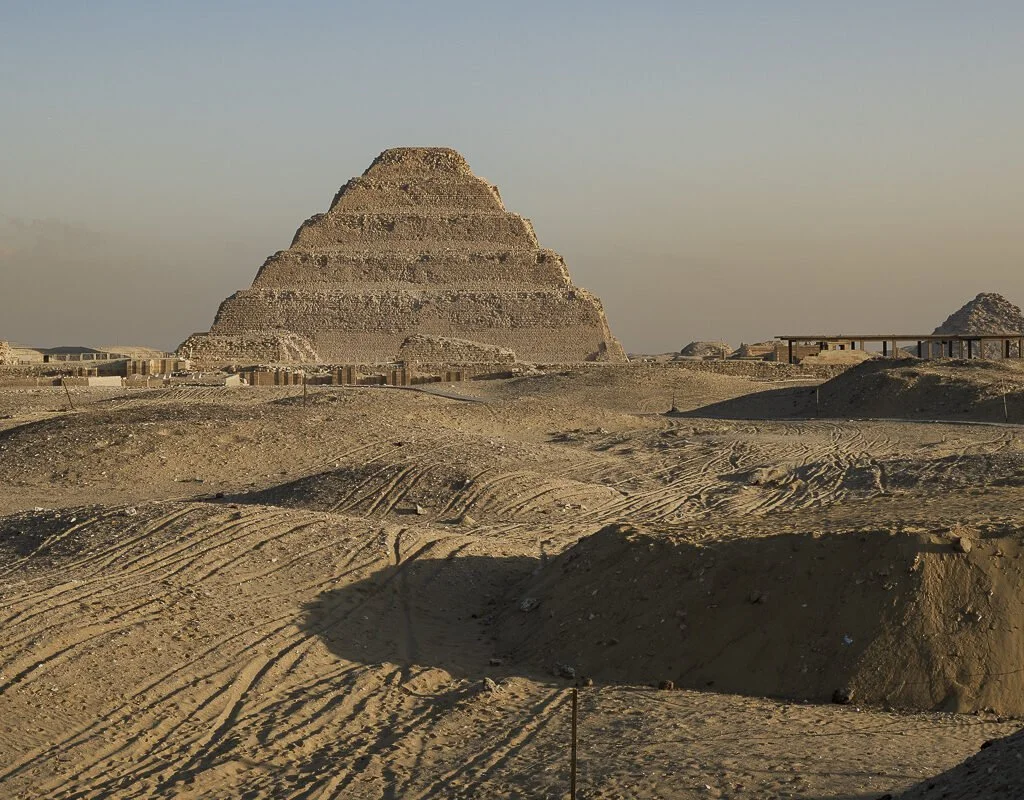
It takes about 40 minutes to get there, and when the stepped pyramid of Djoser appears on the horizon—its silhouette sharp against the pale morning sky—we know we’ve arrived.
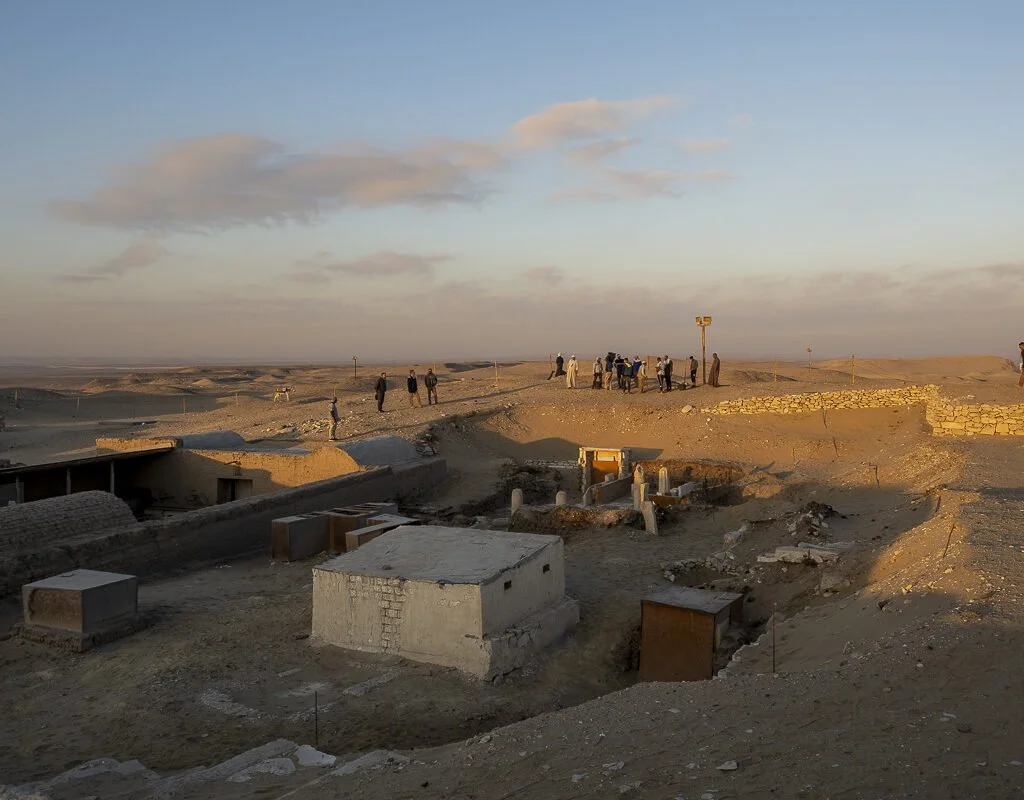
Our excavation concession lies south of the processional way of Unas’s pyramid, in one of the New Kingdom necropoleis (1539–1077 BCE). Here, in 2022, the joint mission of the Museo Egizio and the Rijksmuseum van Oudheden in Leiden discovered a previously unknown burial: the tomb of Panehsy, overseer of the Temple of Amun in Memphis. It is in this very tomb that we are back to work. This year’s goal is to complete its exploration and extend the investigation to the surrounding area.
The first days go by in preparation and adjustments—nothing spectacular, but all essential. The opening phase involves reactivating the site and taking care of administrative matters. The most anticipated moment is the removal of the seals placed at the end of the 2023 season, in the presence of inspectors and officials from the Ministry of Tourism and Antiquities (MoTA).
We reopen the mission quarters, housed within the tombs of Horemheb and Maya, and check the site’s condition together with our Egyptian colleagues. Worktables are cleaned, equipment reactivated, and tools checked one by one. In the storeroom, we update the inventory of materials left from the previous season—crates, registers, forms, and tools—and restock what’s missing.
Did you know that before leaving an excavation, it’s essential to prepare a detailed list of everything that stays on site and everything that needs to be purchased for the next season? It’s a true archaeological shopping list, invaluable when it’s time to set up workstations and get activities rolling again.
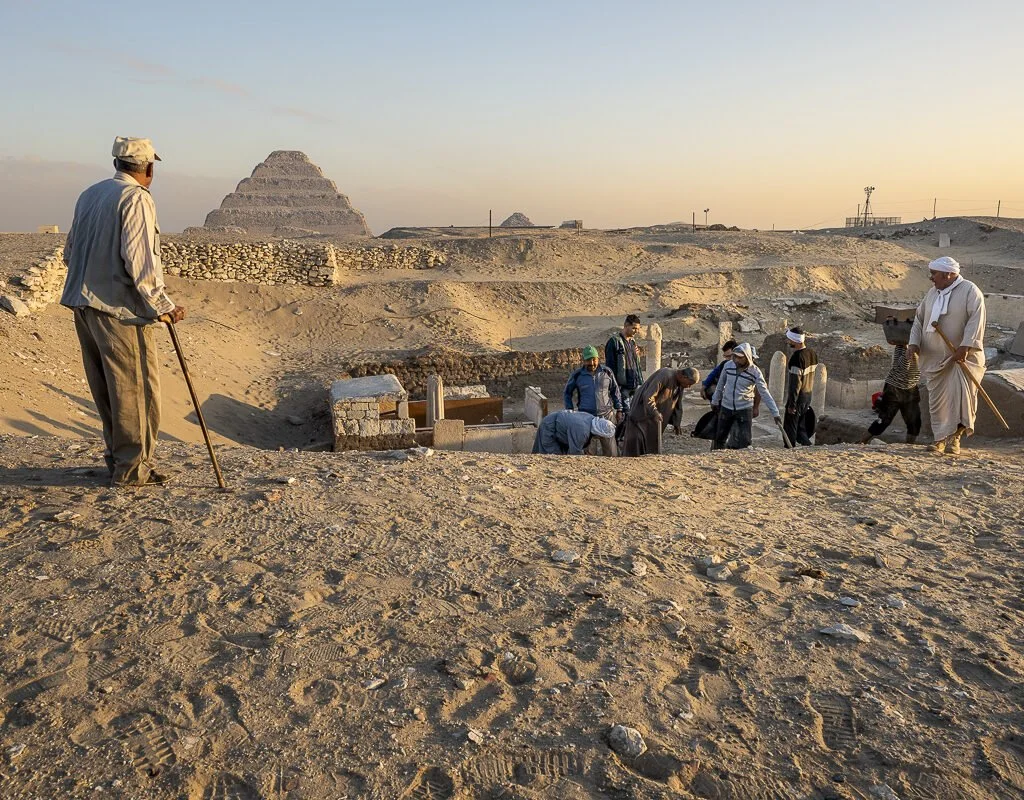
At the excavation area, we reconnect with the structures uncovered in previous campaigns. The sand has partially covered the walls and thresholds, so our first task is to uncover what the desert temporarily hid—or what archaeologists had reburied for protection. The area is marked out, topographic reference points are established for future surveys (we’ll show you more in upcoming diaries!), and the first layers of soil—those most recent—are removed.
The first days fly by in a rhythm of checks, photos, and measurements. Every gesture, even the simplest one, helps restore order and prepare the ground for what’s to come.
Most importantly, we’re reunited with the local staff—their faces, routines, and familiar voices. Smiles and handshakes are exchanged amid the sound of tools and the rustle of sand. This too is part of the mission: reestablishing harmony between people and place, even before the digging truly begins.
Each of us takes up our role: some dig, some photograph, some organize the storeroom, others handle topographic surveys or start studying pottery again. None of this, however, would be possible without the help of the Egyptian colleagues —each with their own specialization—coordinated by the rais, the team leader.
From Sunday, October 12 to November 7, you’ll be with us at the excavation. Through our weekly diaries, you’ll get to discover what life on site is like and how many different skills come together to make the mission a success.
What will this new season hold for us? You’ll just have to wait and see.
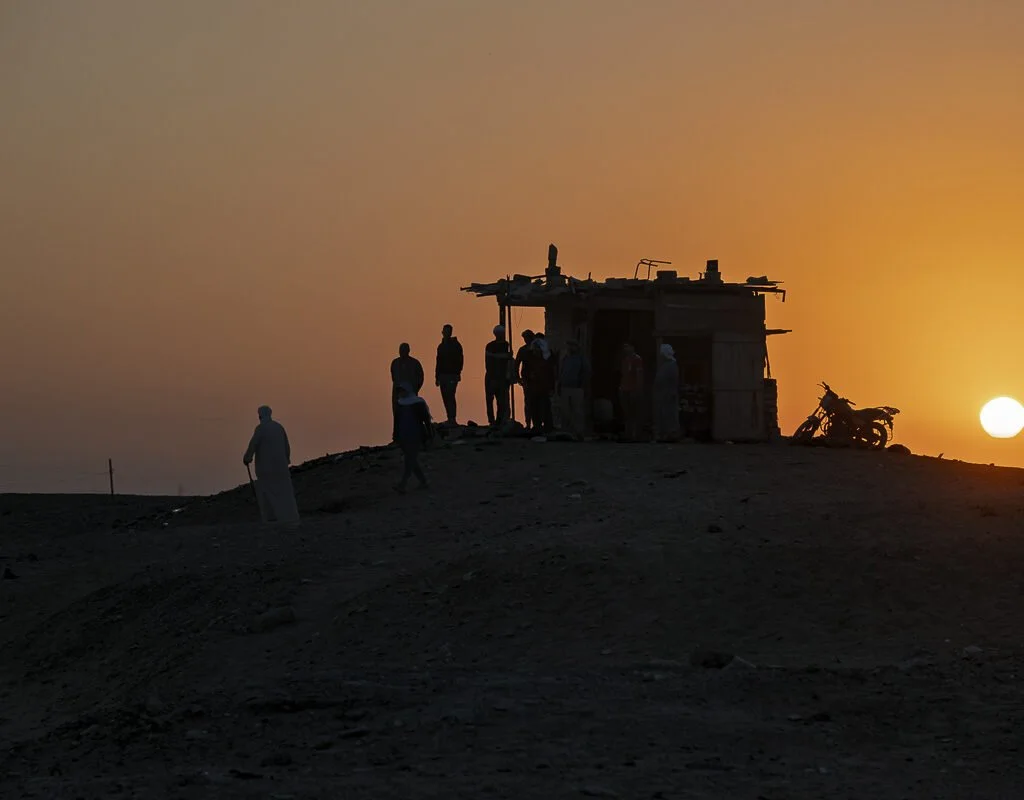
For now, it’s 1:00 p.m.—time to head home.
See you next Friday!