Digging Diaries from Deir el-Medina 2026 – Week Three
The Final Week of Work at Deir el-Medina
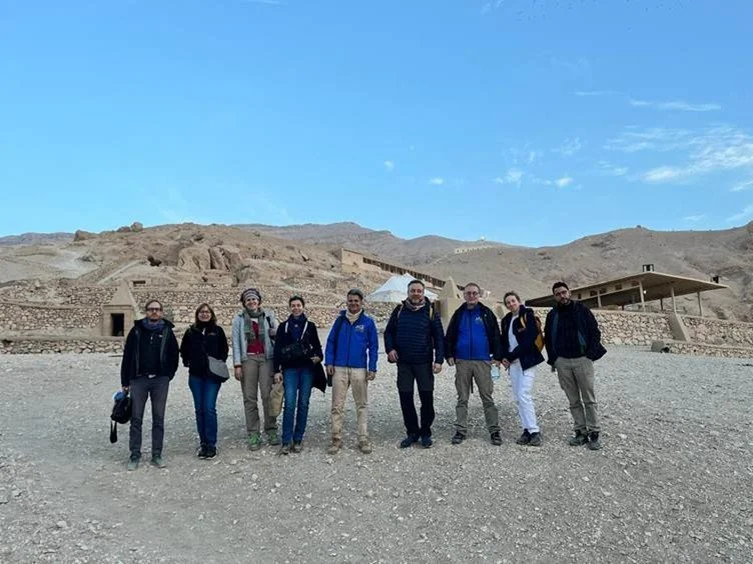
We have now reached the end of this new season of work at Deir el-Medina. The final week has come to a close, and we are preparing to depart: some of us will return to Turin, while others will move on to begin work at another important Egyptian archaeological site, Coptos, just north of Luxor—but don’t worry, you will hear from us there as well!
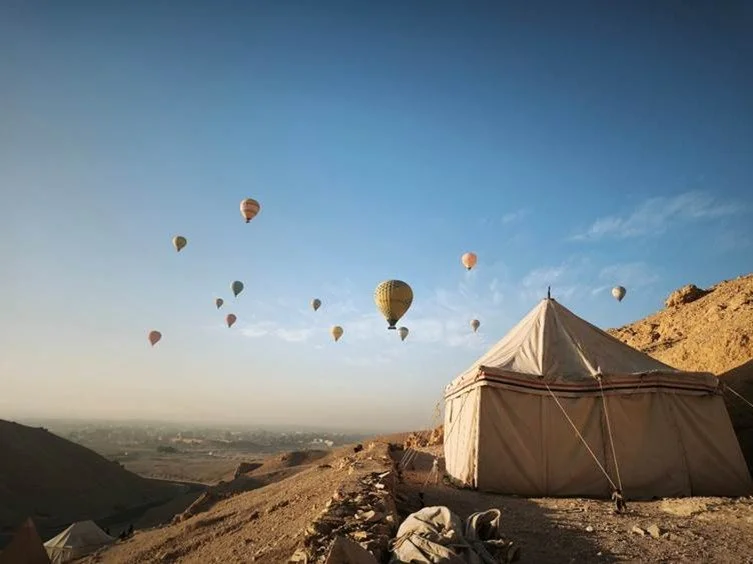
These last days were marked by the flight of hot air balloons that color the sky over Luxor shortly after sunrise, and by the gradual rise in temperatures, which during this Egyptian winter reached as much as 30°C (86°F) during the daytime.
As the end of the mission approached, the pace of fieldwork increased and became more intense, in order to complete the documentation and conservation activities begun in previous weeks. The goal was to close the season by collecting as much data as possible and leaving everything orderly and secure for future campaigns. In this respect, the contribution of every team member was essential.
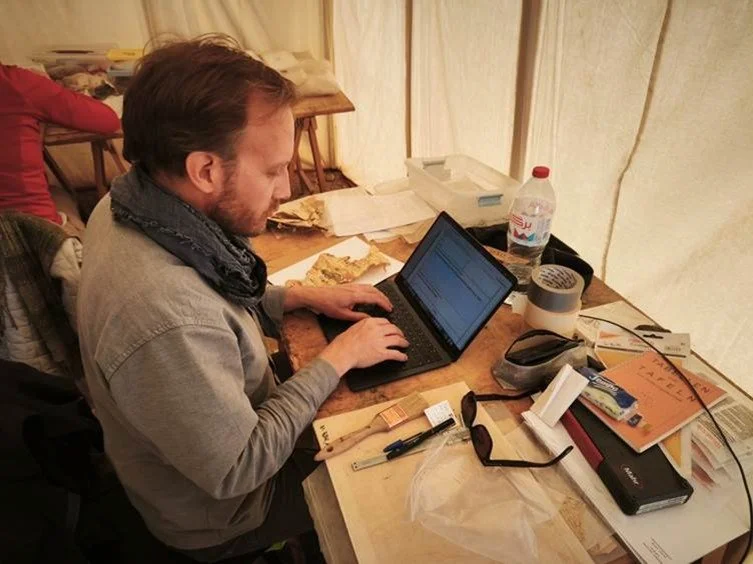
Inside the tent, organized into several workstations, the team focused on both documentation and conservation of the finds.
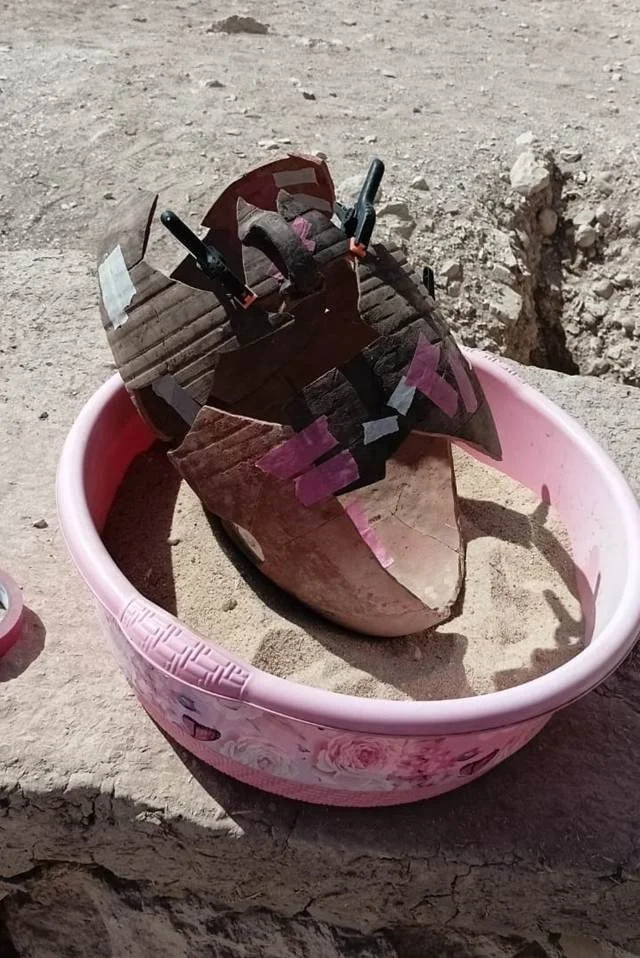
Federico Poole and Johannes Auenmüller completed the cataloguing and database entry of the numerous objects recovered. Sara Aicardi initially worked outside the tent on the reconstruction of several vessels, assembling them from the hundreds of fragments collected during excavation; she then carried out first-aid conservation on small finds that required it and carefully stored all the objects in appropriate containers. Paolo Del Vesco was responsible for drawing the ceramic fragments.
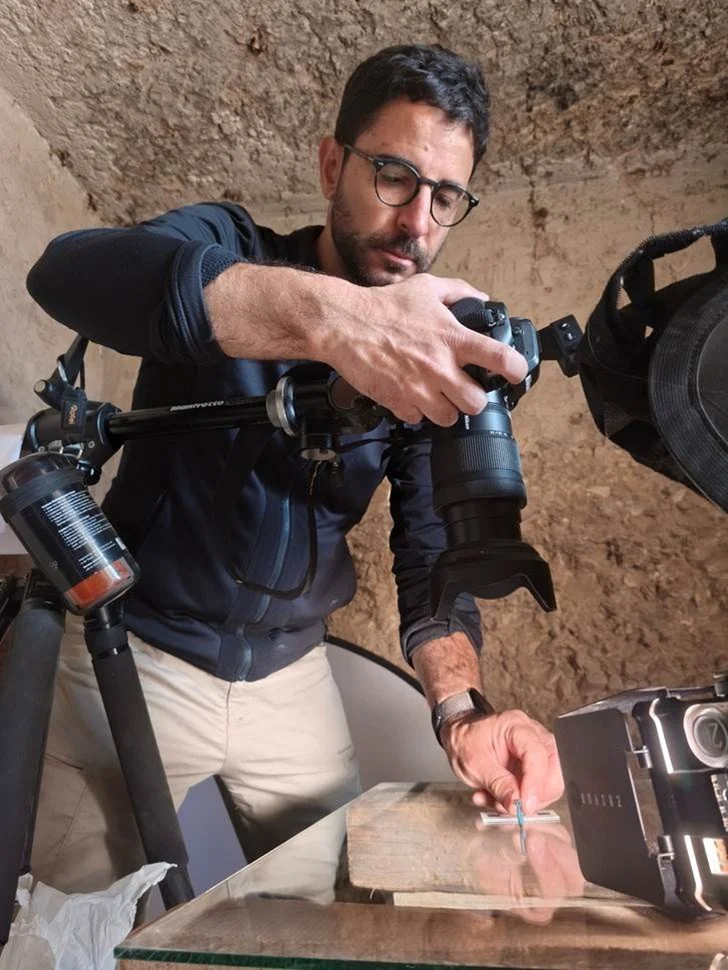
Outside the tent, meanwhile, in a temporary workspace set up within the protected space of the tomb chapel, Nicola Dell’Aquila continued at an intense pace with the photographic documentation of all the finds—an essential task that will allow the study of the materials to continue once back in Italy.
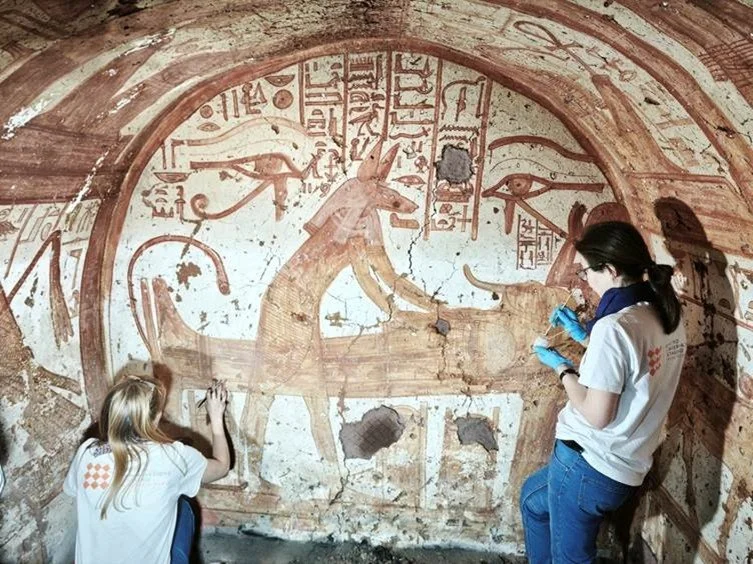
The mission’s work was not limited to surface activities. One of the main objectives of this year’s campaign was the conservation and stabilization of the burial chamber of tomb TT214, excavated and constructed several meters underground. In this confined space, illuminated by spotlights and surrounded by the vivid colors of the wall decoration, Michela Cardinali and Marie-Claire Canepa worked continuously to consolidate and fill losses in the painted surfaces and preparatory layers.
During the week, we also had the opportunity to welcome members of other teams currently engaged in the study and conservation of tombs in the Theban necropolis, and in some cases to return the visit. These moments of exchange are particularly valuable and stimulating, allowing us to compare situations and challenges encountered in the field and, where possible, to align methodologies—especially in the field of conservation.
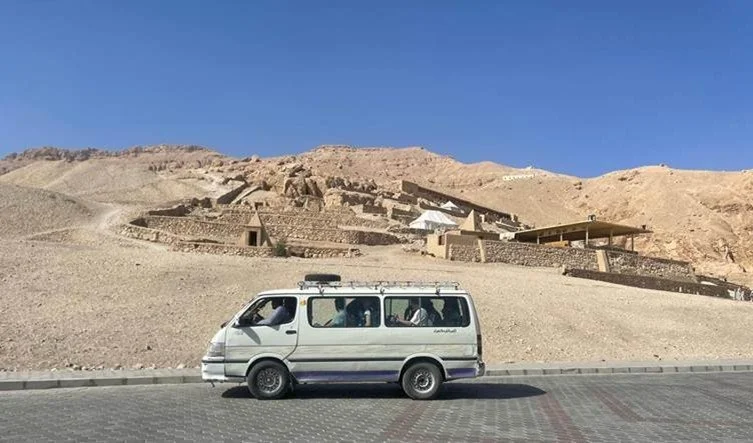
The objectives set for these three weeks of work have been achieved. All that remains now is to deposit the materials in the storerooms, pack away the equipment, dismantle the tent, close and reseal the tomb, and say goodbye to colleagues of many nationalities who have worked alongside us on other research projects, all focused on the site of Deir el-Medina. One last ride on the minibus, passing by the temple of Medinet Habu, and then the return flight home.
Work and research certainly do not end with the close of field activities. On the contrary, they continue with the study of materials, contexts, and architecture in the specialized library of the Museo Egizio. Many discoveries still lie ahead, through the search for parallels to the recovered materials, the detailed analysis of earlier excavations, and the study of comparable examples of wall painting and pigment deterioration.
Now, however, it is time for farewells and acknowledgements. First and foremost, thanks go to this season’s team: we shared emotions, hard work, fatigue, culinary discoveries, satisfaction, joy, interests, wonder, and much more—always with great professionalism, empathy, openness, and lightness of spirit. Our sincere thanks also go to the inspectors, guards, and Egyptian workers at the site, and to the French mission of the Ifao at Deir el-Medina, whose administrative and logistical support allows so many projects to continue studying this fascinating site.
And thank you, too, for following us on this mission. Until next time!
If you wish, you can support the Museo Egizio’s excavation missions and help bring new stories to light.