Digging Diaries from Deir el-Medina 2026 – First Week
Back to Deir el-Medina: Document, Restore, Discover.
We have already reached the end of our first week at Deir el-Medina. Time has flown by, paced by the rhythm of our workdays and the many activities resumed after the winter break. Returning to this site reminds us every time how special it is to work in a place that is not only archaeology but also living history: every house, every corner, every object, and every tomb tells the story of the daily life of those who lived in this village around 3,000 years ago.
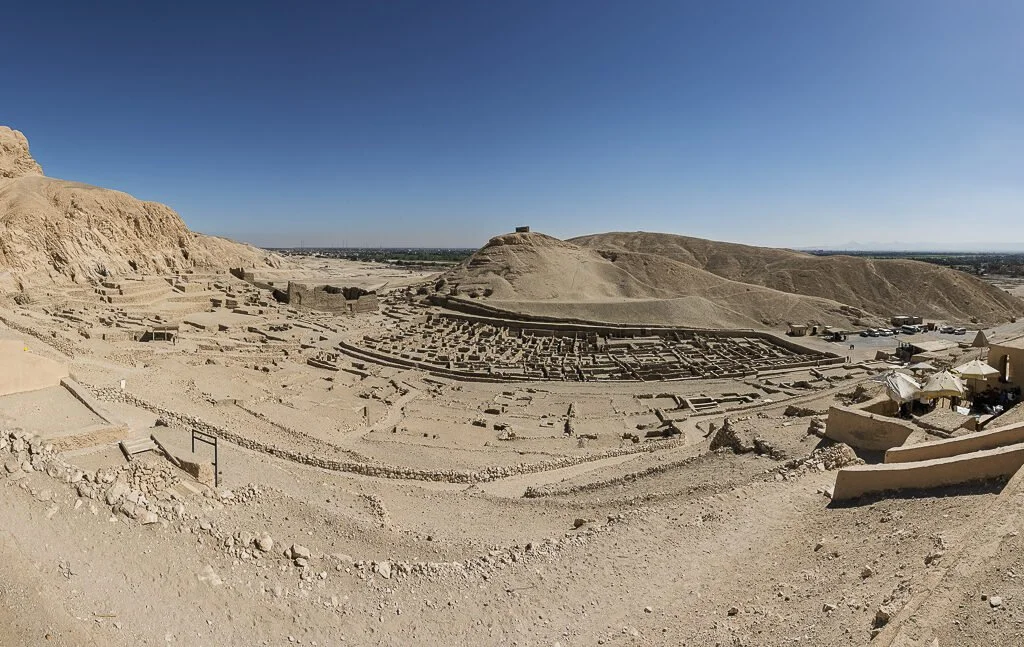
The archaeological site of Deir el-Medina is located in Upper Egypt, on the west bank of the Nile, opposite the modern city of Luxor, in the area of ancient Thebes. It was home to the finest craftsmen, workers, and artists of the time, along with their families, who were tasked with building and decorating the tombs of the nearby Valley of the Kings and Valley of the Queens. Just a short distance from the houses, to the west and east of the village, lie the tombs of the artisans and their families. The strategic location of the village—nestled in a valley at the edge of the desert and close to the royal tombs—allowed the workers easy access to the funerary sites while maintaining some separation from the urban life of Thebes.
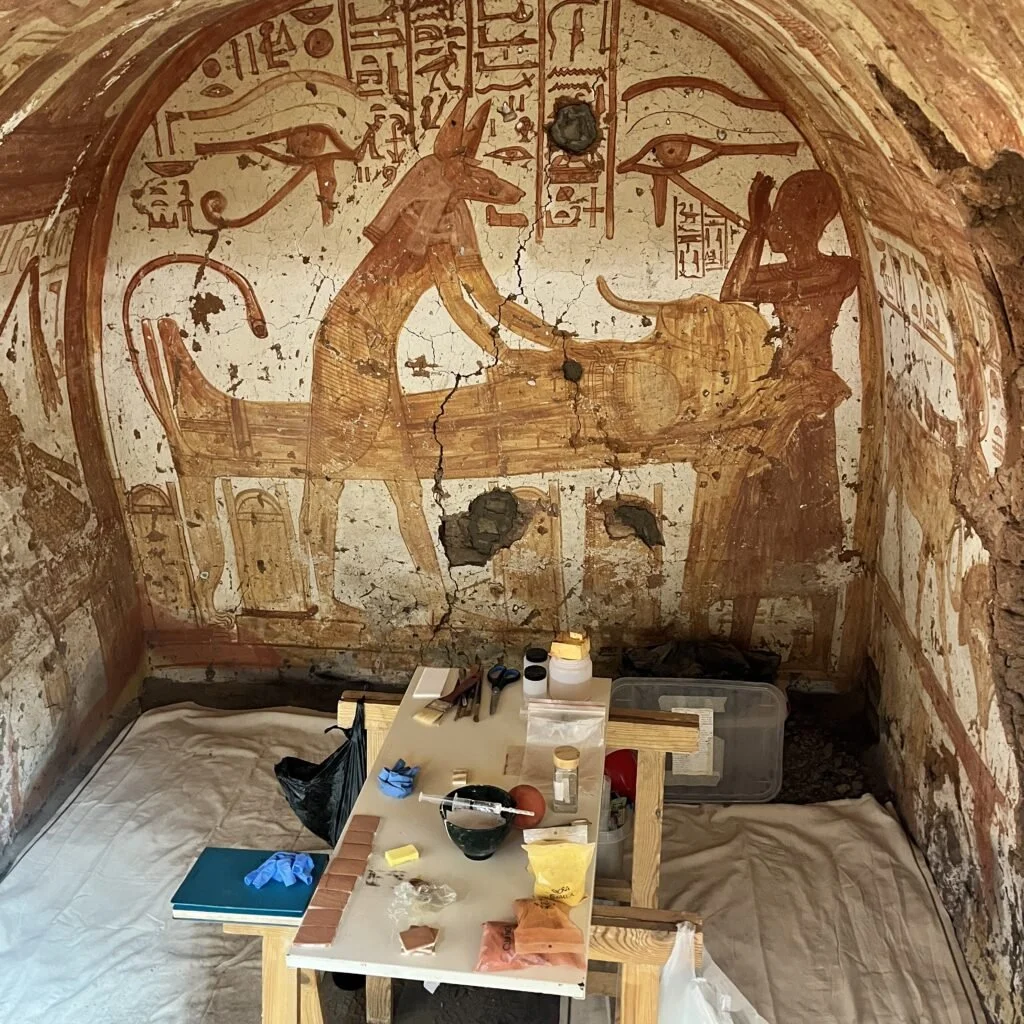
Today, the site is known for the remains of the village, the artisans’ tombs, and the richness of inscriptions and documents that provide a unique glimpse into daily life in ancient Egypt. This is why the Museum has returned to excavate here. As part of the French archaeological mission to Deir el-Medina conducted by the IFAO, the Museo Egizio is carrying out research on several Ramesside tombs (1292–1077 BCE) in the western necropolis. Fieldwork allows us not only to study these fragile structures using new technologies, but also to recontextualize many objects from the collection, shedding new light on their meaning and stories. The main objective of this year’s campaign is to continue conservation work in the funerary chamber of tomb TT214, belonging to the overseer Khaui, who lived during the reign of Ramesses II (1279–1213 BCE), and to further study the ceramics and small finds recovered in previous years.
We arrived on the afternoon of January 15 and, after settling into a hotel on the west bank near the site, began familiarizing ourselves with the environment and the rhythm of the mission. January 16 was devoted to organizing our materials and checking what we needed to purchase in preparation for our first day of work on Saturday, January 17. The mission runs six days a week, with Friday as the day off. Finally, the big day arrived. On Saturday morning at 6:40 a.m., we set out for the site. The dawn at Deir el-Medina welcomed us with a golden light illuminating the mountains and transforming the landscape into a spectacular scene: sand and rocks shimmered in the first rays of sunlight, and for a moment everything else seemed to disappear. After greeting the rest of the team—a group of about fifty partners involved in various projects within the mission—the Egyptian inspector opened tomb TT214, removing the seals and allowing us to enter and officially begin this year’s campaign.
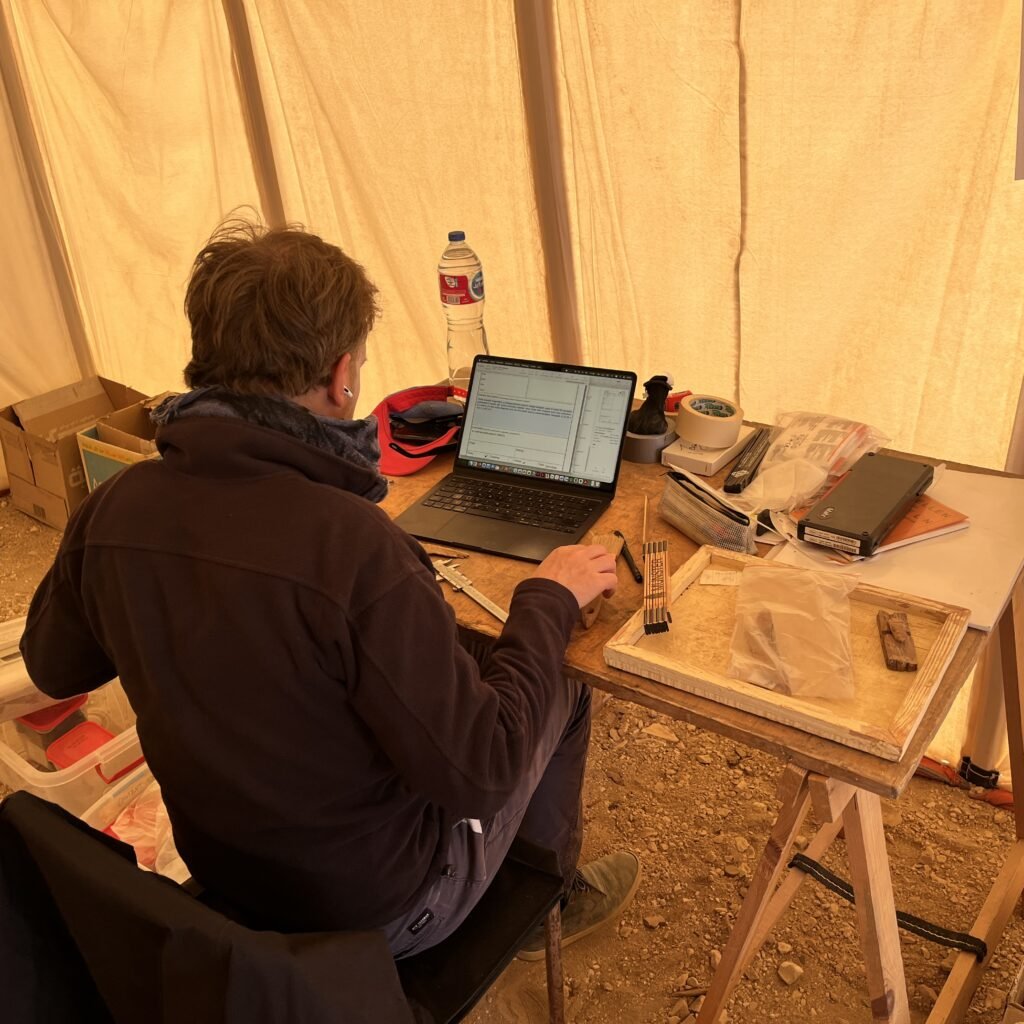
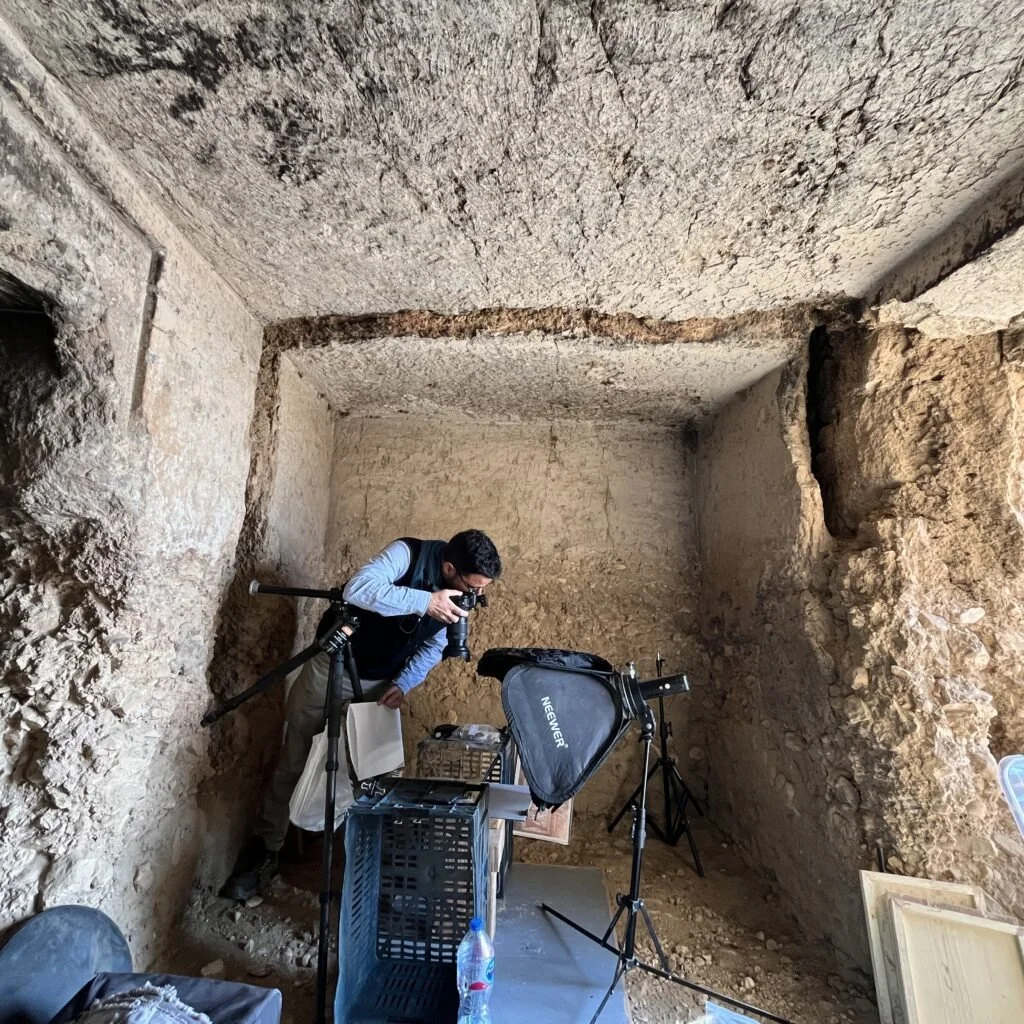
In the first days, we focused on continuing the operations started in 2024. Johannes resumed the inventory of small objects recovered during previous campaigns. Each artifact, once cataloged, is photographed by Nicola, our photographer. It is a long and meticulous process that requires careful attention and precision, as numerous pieces of information must be recorded for every object to ensure proper documentation.
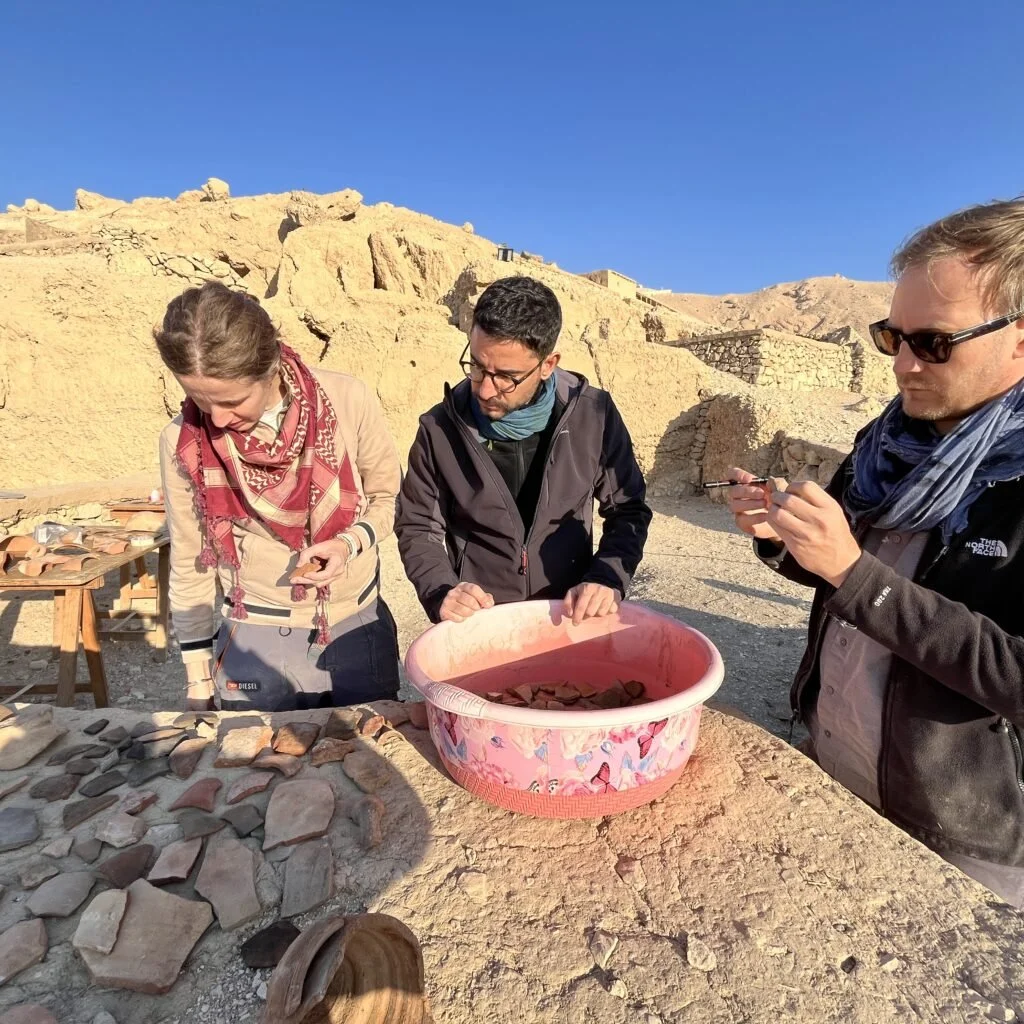
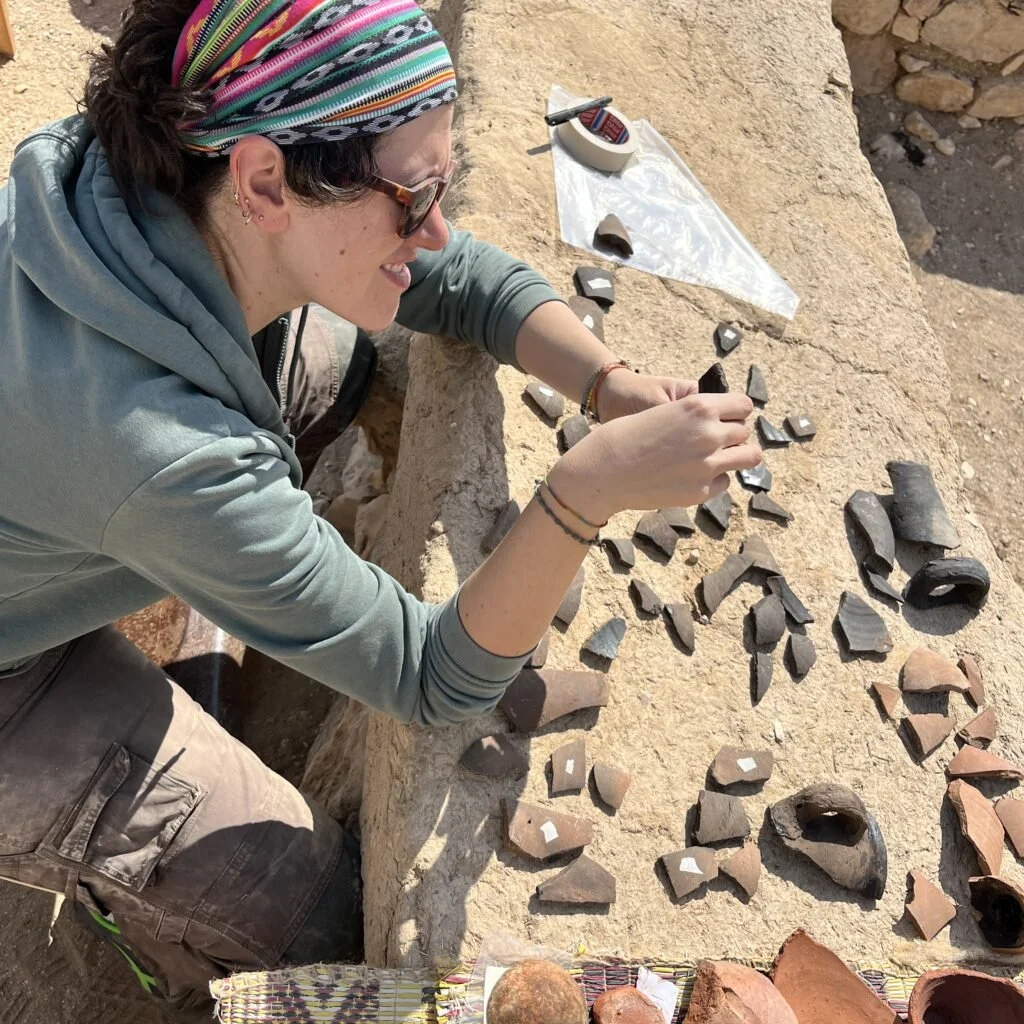
Federica and Sara continued studying the many ceramic fragments already recovered. After an initial cleaning with water, they carefully examine each piece, searching for possible connections among fragments. Thanks to their expertise, they have been able to reconstruct several vessels, including fragments bearing hieroglyphs and stamps—objects of particular scientific value that help us better understand the function and use of these containers.
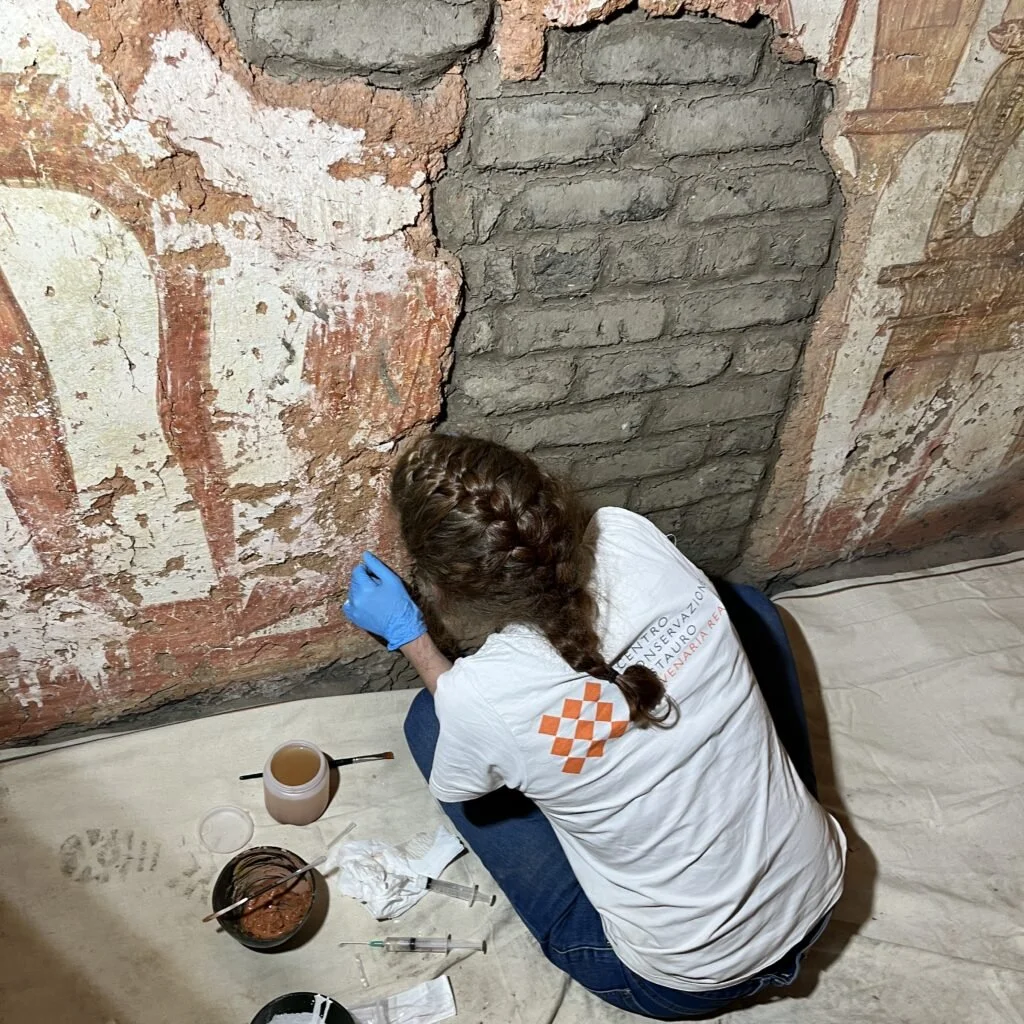
Restoration work has also resumed. Roberta, a restorer from the CCR La Venaria Reale, has returned to work in the funerary chamber, focusing on consolidating the decorated walls. It is delicate and essential work for preserving the surfaces, and much still remains to be done. Keeping the team on schedule and ensuring that everything runs smoothly is Cédric, our excavation director. It is no easy task, but we are always ready to help.
The week concludes with documentation, study, and encouraging early results that motivate us to continue. We look forward to sharing more next week, taking you along as we explore Deir el-Medina day by day.
If you would like, you can accompany us on this journey by supporting the Museo Egizio’s excavation missions and helping bring new stories to light.